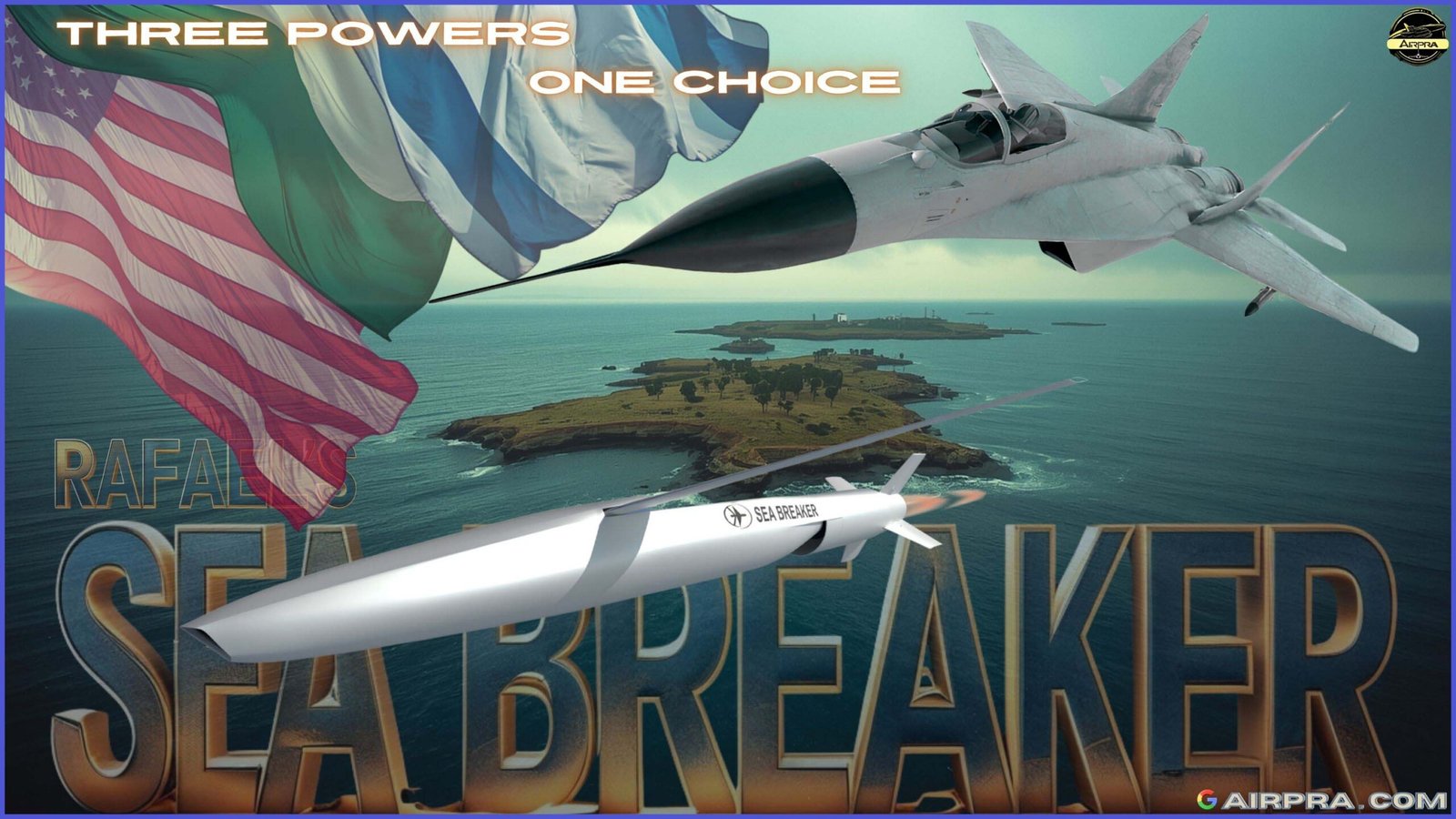
Modern warfare is moving towards longer reach, greater precision, and smarter weapons capable of striking deep in contested environments. Yet, one missile stands out for its ability to challenge conventional thinking. So, Why Are Israel, India & the U.S. Eyeing Sea Breaker? The answer lies in a new generation of precision strikes, designed for the battlefield of tomorrow.
What if the greatest threat to a missile today is no longer the distance it must travel—but everything standing between the weapon and its target?
PHASE 1 — When Missiles Can No Longer Rely on GPS
Jamming navigation signals, spoofing satellites, concealing a warship within maritime traffic, deploying decoys, and surrounding the target with layers of electronic warfare and close-in defence have transformed the modern battlespace.
For Israel, however, this is far from a theoretical challenge. Its missile technology has evolved through decades of combat experience in some of the world’s most heavily contested environments.
The story can be traced back to the Israeli Navy’s experience in the 1960s, when the loss of INS Eilat to Soviet-made P-15 Styx anti-ship missiles demonstrated just how dramatically naval warfare was changing.
Israel responded with the development of the Gabriel family, establishing a new approach to sea-skimming anti-ship warfare for its navy. Decades later, Rafael’s Spike family pushed precision engagement further, introducing increasingly sophisticated guidance, network connectivity, and autonomous capabilities.
But the battlefield continued to evolve. Modern missiles can no longer assume that satellite navigation will remain available, that the target will stay exposed, or that conventional guidance alone will be enough to complete the engagement.
This raises a critical question: what kind of missile can prevail when the electromagnetic spectrum is contested, GPS cannot be taken for granted, and targets can move, hide, or alter their position before impact?
Rafael began shaping its answer around these emerging requirements in the late 2010s. The concept was not simply about building another long-range missile, but about rethinking how a precision weapon could find, identify, and engage its target in an increasingly denied battlespace.
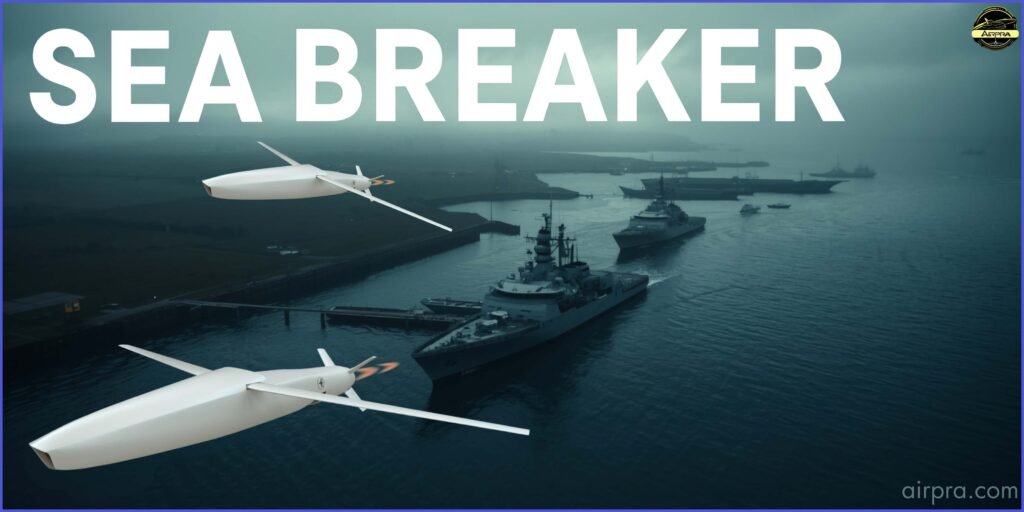
Then, in 2021, the world finally got its first look at that answer—the all-new Sea Breaker. A fifth-generation, long-range precision-guided weapon, Sea Breaker is engineered to engage both maritime and land targets from stand-off ranges of up to 300 kilometres.
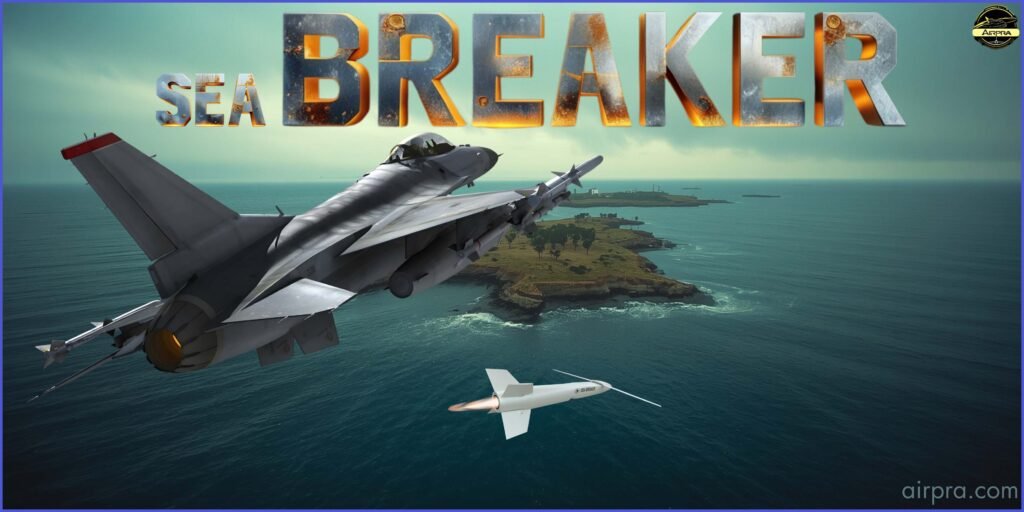
But the real challenge begins when the missile enters the target area. Rather than relying on an active radar seeker that could reveal its presence, Sea Breaker employs a passive, all-weather Imaging Infrared seeker, supported by scene-matching algorithms and Automatic Target Recognition.
Its guidance architecture is intended to remain effective even under GNSS (Global Navigation Satellite System) denial. At the same time, a low-observable, sea-skimming or terrain-following flight profile can keep the weapon concealed from enemy defences until the final stages of its approach.
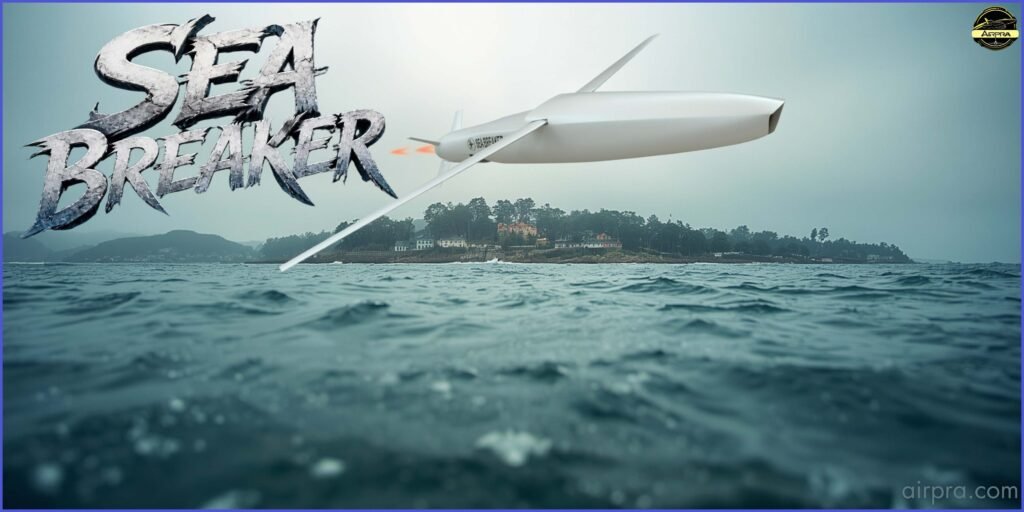
This is where Sea Breaker becomes more than a conventional precision missile. It is not simply following a predetermined set of coordinates. Instead, its AI-supported recognition architecture is designed to interpret the scene ahead, helping distinguish the intended target from surrounding objects and potential decoys.
A two-way datalink can also enable in-flight mission updates, including course adjustments, abort commands, and battle-damage assessment. Rafael describes the missile as capable of autonomous operation while retaining human decision authority.

The legendary Lockheed F-117A Nighthawk remains one of aviation history’s most iconic aircraft—a pioneering stealth fighter whose Skunk Works engineering and radical design still look decades ahead of its time.
Now, you can own a piece of that history with a premium 1/72-scale die-cast model, meticulously crafted to capture the distinctive details of this revolutionary aircraft.
Available exclusively through AirModels with worldwide shipping. Limited stock—secure your piece before the limited stock is depleted.
At around four metres long and weighing less than 400 kilograms, Sea Breaker carries a 250-pound warhead and travels at high-subsonic speed. Its philosophy is straightforward: reach the target before the defender has enough time to react.
Low-altitude flight, advanced guidance, and autonomous target engagement combine to make detection and interception considerably more difficult.
But Rafael was not simply developing another stand-off weapon. Sea Breaker represented a broader shift in how precision strike could work inside a heavily contested battlespace. And the next step would take that concept even further.
PHASE 2 — Ice Breaker: From Sea to Air
If Sea Breaker was developed to give a modern missile the ability to find and engage targets in a heavily contested battlespace, another question soon emerged: why should such a capability be limited to ships and land-based platforms?
Rafael had no intention of stopping there. The next evolution took the concept into the air, and in July 2022, at the Farnborough International Airshow, the company publicly unveiled the Ice Breaker.
As an air-launched member of the family, Ice Breaker carries the same core philosophy into the air domain—long-range stand-off attack, low observability, GNSS-independent operation, advanced IIR sensing, and autonomous target recognition. And for India, this is where the story becomes particularly interesting.
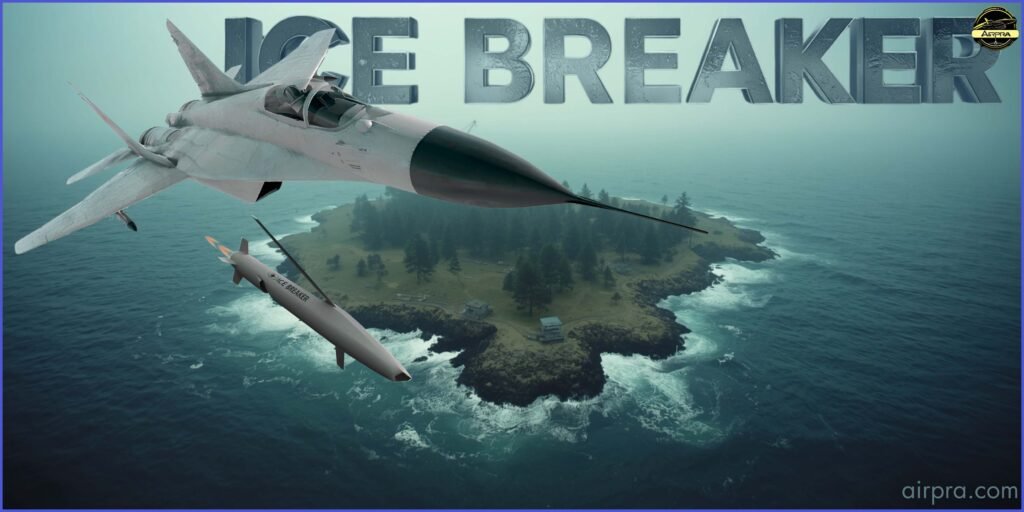
At Aero India 2025, Bharat Dynamics Limited and Rafael signed an MoU focused on local production of the Ice Breaker missile in India. The partnership emphasised domestic manufacturing while also positioning the weapon for potential supply to the Indian Armed Forces.
Feasibility studies have indicated that integrating Ice Breaker onto Indian fixed- and rotary-wing platforms could require relatively minor modifications. Aircraft compatible with the SPICE 1000 outer mould may potentially accommodate the missile with limited changes to avionics and stores certification.
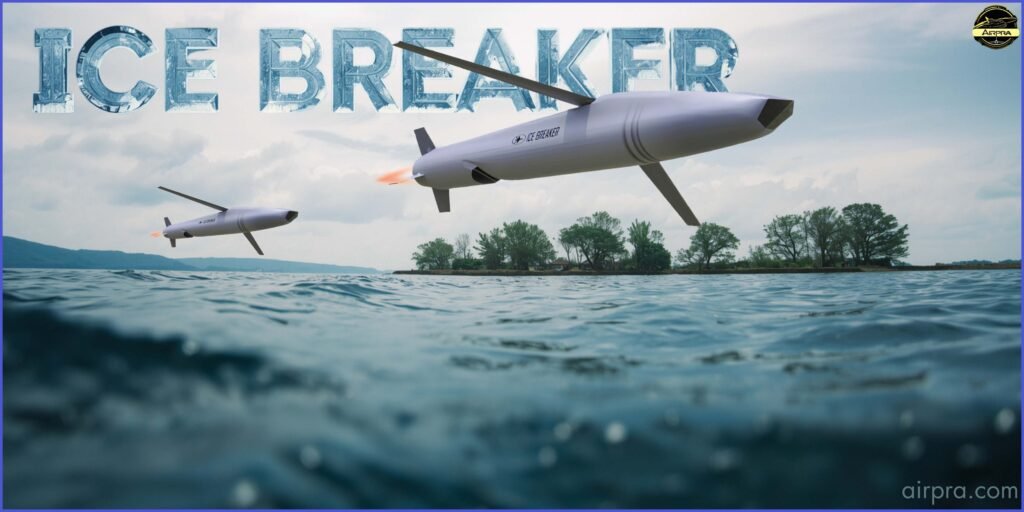
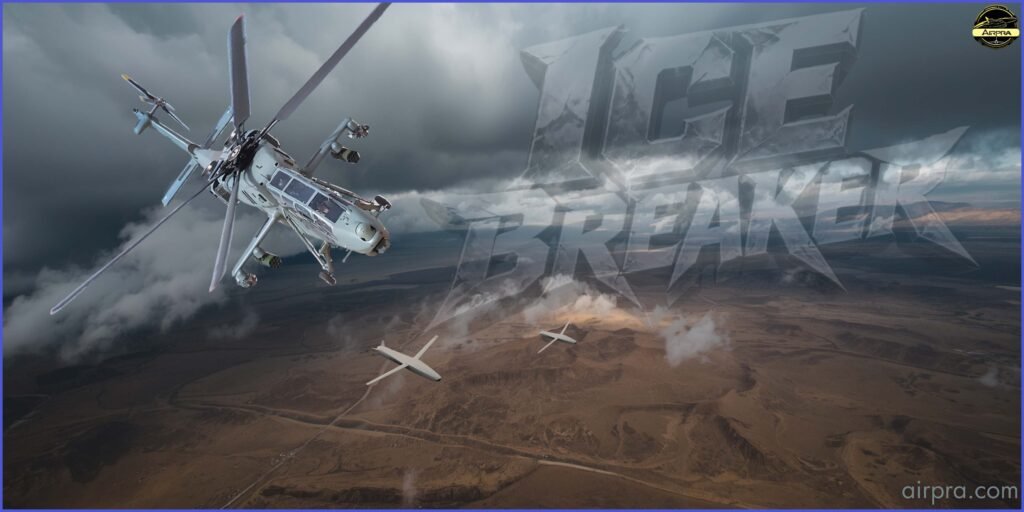
This could allow the LCA Tejas and the Indian Navy’s MiG-29K to potentially carry up to four missiles, while the LCH Prachand could potentially carry two. Together, these platforms could form the launch point for a long-range, networked strike capability designed to operate deep within a contested battlespace.
But Rafael’s vision extended beyond Israel and India. Across the world, another military was confronting a remarkably similar question—how could this kind of long-range precision strike capability be adapted for its own requirements?
PHASE 3 — Bullseye: An American Entry
In April 2025, General Atomics Electromagnetic Systems (GA-EMS) and Rafael signed an MoU to bring the technology into the United States under the name Bullseye. However, Bullseye is not simply Sea Breaker with a new paint scheme.
Bullseye takes the Ice Breaker architecture and adapts it specifically for American military requirements and U.S. standards, with General Atomics leading the U.S. programme as the prime contractor.
The missile is being built and integrated at the company’s manufacturing centre in Tupelo, Mississippi, with a production approach designed to support scalable manufacturing. Hence, this American version pushes the concept even further.

General Atomics describes Bullseye as a fifth-generation missile designed to operate in GPS-denied environments throughout its flight while remaining resilient against enemy threats. It can perform sea-skimming flight profiles for anti-ship missions, as well as terrain-avoidance and nap-of-the-earth flight profiles for land-attack missions. The missile is designed for launch from air, sea, and ground platforms.
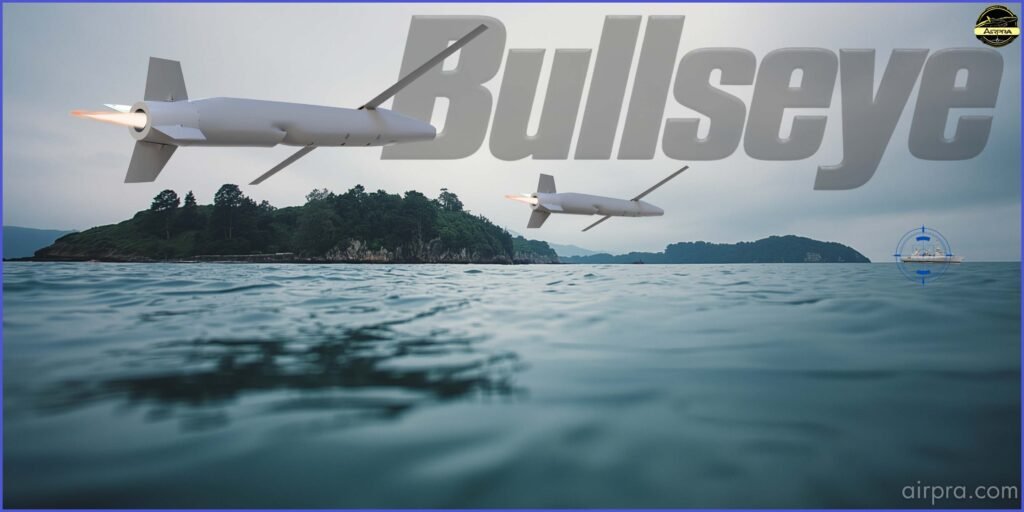
Its modular architecture can accommodate 250- or 500-pound-class warheads, while the missile has a range of more than 300 kilometres with a single ventral air intake for its turbojet engine, enabling high-subsonic flight.
It combines guidance that does not depend on GPS or other satellite navigation signals, but rather on an advanced imaging-infrared seeker supported by AI and machine learning, along with Automatic Target Recognition. The missile is optimised for deep-strike scenarios in all-weather conditions and designed to operate in anti-access/area-denial (A2/AD) environments.
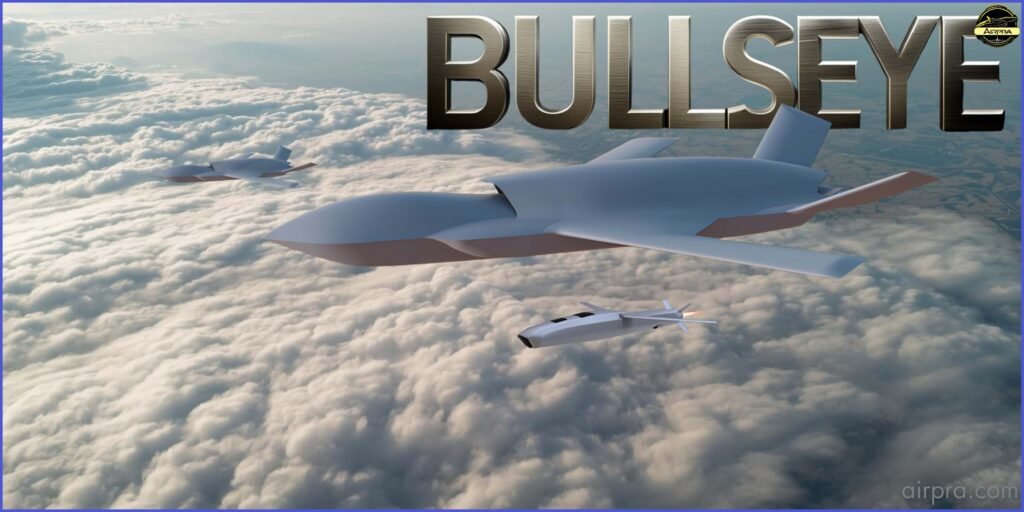
The company is also exploring fixed-wing aircraft, ground-based launchers and UCAVs such as the Gambit series as potential launch platforms for Bullseye.
Endgame Analysis
The battlefield doesn’t care where a missile was launched from. It cares whether that missile can survive the journey, identify the right target, and strike before the defender has a chance to stop it.
Sea Breaker started the concept. Ice Breaker expanded it. Bullseye is taking it even further. And perhaps the real revolution isn’t the missile itself—but the battlefield it is being designed to fight in.

A Quick Message to Our Readers
Some details in our articles may change over time. For the most accurate and up-to-date information, we recommend consulting additional sources.
We’re passionate about providing you with trusted insights into military systems and global developments. Your support helps us keep this work going. When you purchase through our affiliate links, you’re helping us grow while receiving high-quality products in return.
Your thoughts matter to us. If there’s a topic or defence system you’d like to learn more about, let us know in the comments—we’ll do our best to cover it. Thank you for being part of our journey. We appreciate your time and interest—happy reading!