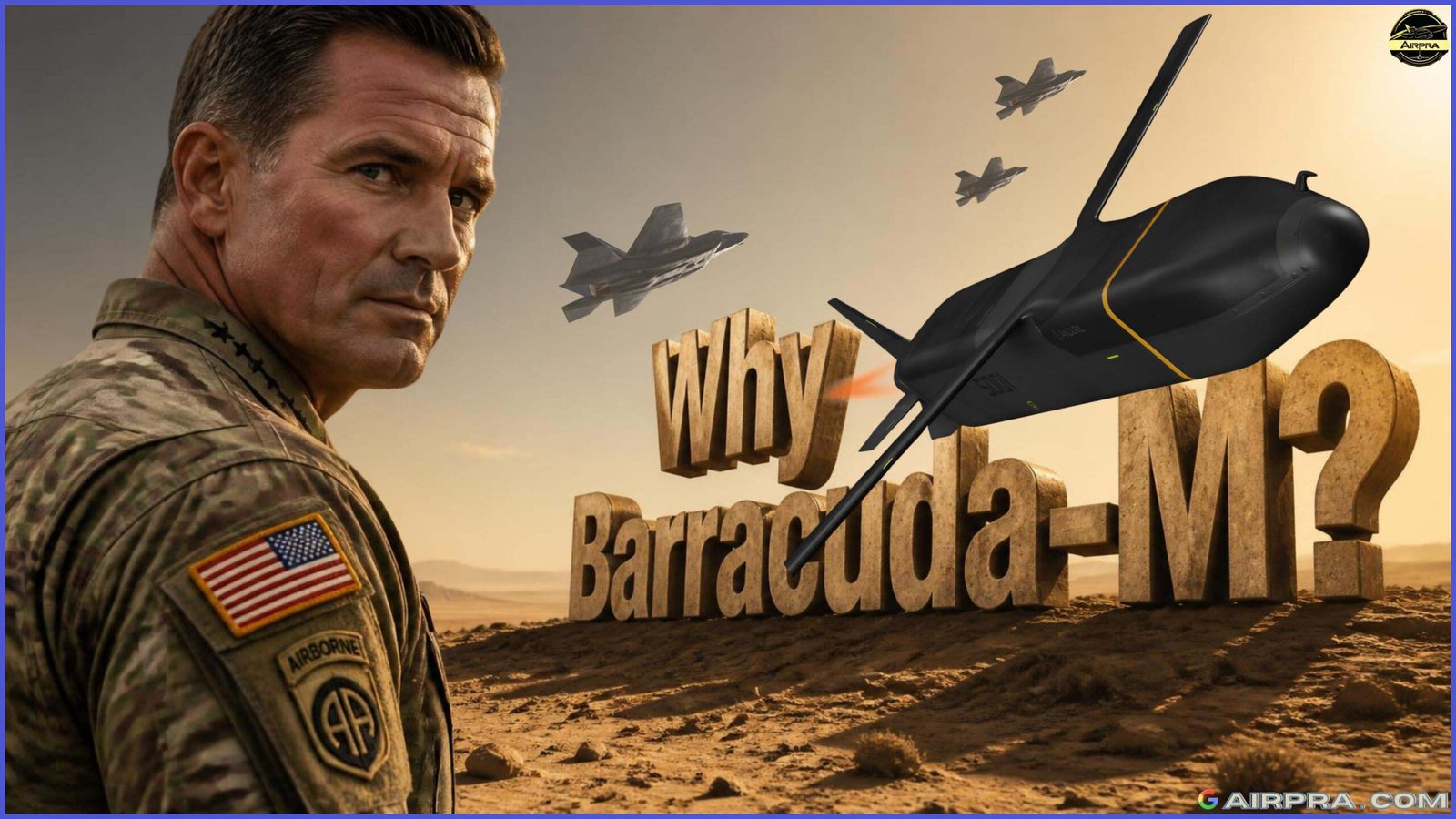
Modern warfare demands more than technological superiority—it demands speed, affordability, autonomy, and numbers. So, Barracuda-M — Adopted by the U.S. Army. Is It Worth It? This new family of autonomous missiles is designed to challenge the economics of precision warfare, but does its innovative concept truly deliver a decisive battlefield advantage?
A Missile America Wants to Build by the Thousands
Imagine a weapon designed not around the question, “How advanced can a single missile become?” — but around a far more consequential question: “How many can we put into the sky when war demands thousands?”
Because in a major conflict, technological superiority is only one part of the equation. The other is the ability to deliver that capability in sufficient numbers.
A missile that costs millions of dollars, requires highly specialised labour, relies on complex defence-specific supply chains, and can only be manufactured in limited quantities may be extraordinarily capable.
But if combat operations consume those weapons faster than industry can replenish them, even exceptional performance eventually becomes a problem of production capacity. And this is precisely the challenge Anduril Industries set out to address.
The company argues that many modern precision-guided weapons have become increasingly complex, expensive and difficult to manufacture at the scale that a high-end conflict could demand. Its answer was not simply another conventional cruise missile.
Instead, Anduril developed the Barracuda family of air-breathing, software-defined Autonomous Air Vehicles, built from the outset around modularity, autonomy and scalable manufacturing.
And then came the configuration intended to take this philosophy into the long-range strike role: the Barracuda-M.
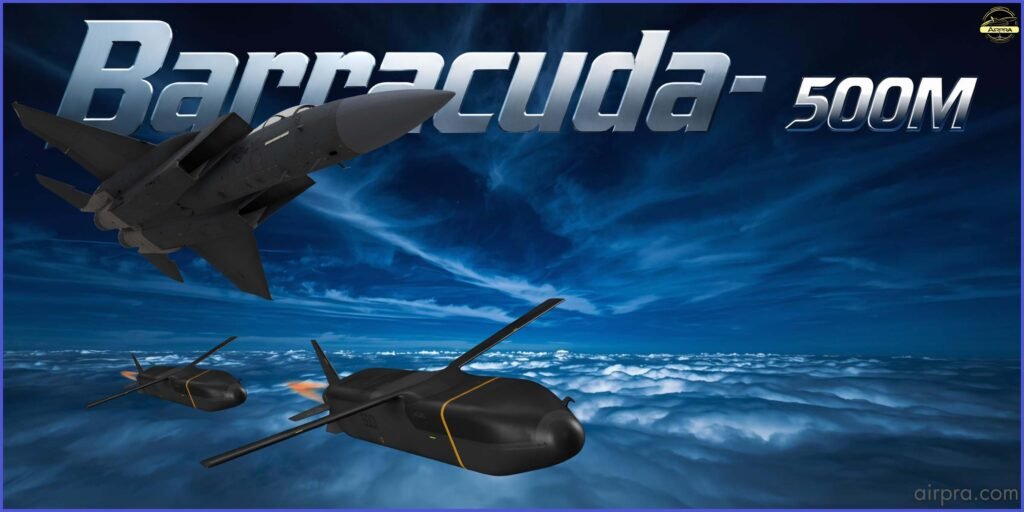
The “M” denotes the munition configuration of Barracuda. It comprises three progressively larger members: Barracuda-100M. _____ Barracuda-250M. _____ And Barracuda-500M. Three different sizes. Three different range classes. Different payload capacities. But all built around one fundamental philosophy:
Build the weapon faster, build it at lower cost, produce it in large numbers — and use software-driven autonomy to provide capabilities that would otherwise demand increasingly complex hardware. And the timing of this approach is no coincidence.
Recent wars and military contingency planning have exposed a deeply uncomfortable reality for modern militaries: precision-guided weapons can be expended at a rapid rate, while sophisticated missile production lines cannot simply be expanded overnight. Anduril therefore approached the challenge from the factory backwards.
Rather than designing another exquisite missile first and then determining how to manufacture it at scale, Barracuda was conceived around the practical requirements of producing large quantities during a major conflict.
According to Anduril, Barracuda requires up to 50% less production time, 50% fewer parts and 95% fewer tools than competing solutions, while the company targets an average cost approximately 30% lower than comparable systems.
Anduril also says the design enables assembly with fewer specialised tools, incorporates commercially derived components, and relies on a supply chain intended to be more resilient and scalable.
And that is the fundamental idea behind Barracuda-M: not simply a smarter missile, but a weapon designed around the economics of industrial-scale warfare — where affordability, production capacity and autonomy can be just as decisive as raw technological sophistication.
The legendary Northrop YF-23 “Gray Ghost” remains one of aviation history’s greatest “what if” aircraft—an experimental fighter whose sleek stealth profile and radical design still look decades ahead of its time.
Now, you can own a piece of that history with a premium 1/72-scale die-cast model, meticulously crafted to capture the distinctive details of the original prototype.
Available exclusively through AirModels with worldwide shipping. Limited stock—will you own a piece of aviation history?
What Makes Barracuda-M Different?
Now compare that philosophy with some of the weapons already serving the United States. Take the AGM-158 JASSM family.
JASSM is a sophisticated, stealthy, long-range stand-off weapon designed to strike high-value, well-defended targets while keeping the launch aircraft outside hostile air-defence envelopes. It is extremely capable — but it represents the traditional approach to high-end precision weapons.
Historical U.S. procurement data has placed JASSM variants in the million-dollar-per-round class, while more recent reporting has put the cost of JASSM and LRASM at around $1.5 million per missile.
Then there is LRASM, derived from the JASSM family and specifically developed for long-range anti-surface warfare against high-threat maritime targets. It uses semi-autonomous guidance and is designed to reduce its reliance on external ISR, network links and GPS navigation in contested environments.
The U.S. Navy has integrated LRASM on the F/A-18E/F Super Hornet, with other platforms also being incorporated or pursued.
And at the other end of the spectrum are weapons such as Hellfire and JAGM, which serve important tactical roles but are built around considerably shorter engagement ranges and different mission requirements. JAGM, for example, is intended to replace Hellfire while providing multi-mode precision targeting for tactical aircraft and rotary-wing platforms.
However, Barracuda-M is aiming for a different position within this weapons spectrum. The objective is to combine stand-off range, autonomous capabilities, modular payload options and low production cost into a scalable family. And it is the economics that make this approach particularly disruptive.
A 2025 NDIA report cited Anduril’s Barracuda baseline at around $150,000, compared with roughly $1.5 million for the legacy AGM-158 JASSM. That represents a fundamentally different cost equation for precision strike — although the figures should be understood as reported baseline comparisons rather than fixed prices for every variant or configuration.
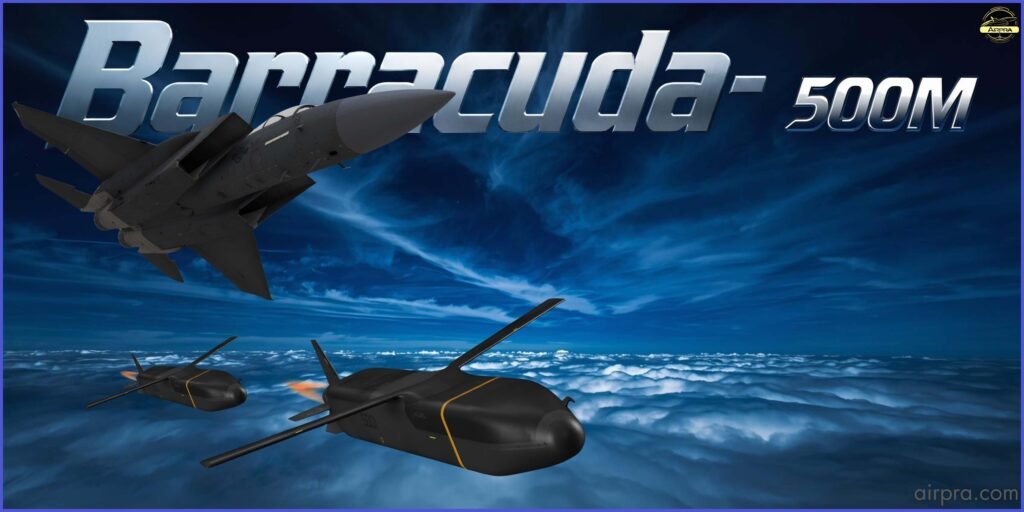
And in May 2026, Barracuda-500M crossed another major milestone. Anduril signed a U.S. government framework agreement covering the procurement and delivery of a minimum of 3,000 surface-launched Barracuda-500M systems to the U.S. Army over three years, with the potential for additional quantities.
With a 100-pound munition payload, 500-plus nautical miles of range, and a containerised launcher capable of carrying up to 16 rounds, this is where Barracuda’s mass-production concept begins moving from development into large-scale procurement.
That is not simply another missile contract. It is a statement about munition mass.
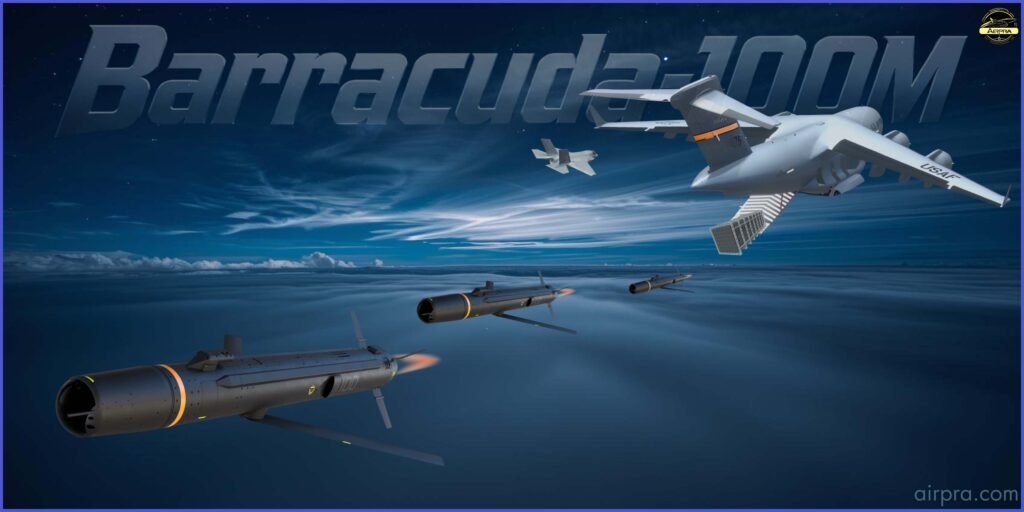
And Barracuda was deliberately designed for flexible deployment. Anduril says the family is intended for a range of launch concepts, including aircraft, ground-based systems, maritime platforms and palletised deployment from transport aircraft.
Different Barracuda variants are also being developed around different launch platforms and mission requirements, allowing the same underlying design philosophy to extend across multiple domains.
The Three Barracuda-M Variants
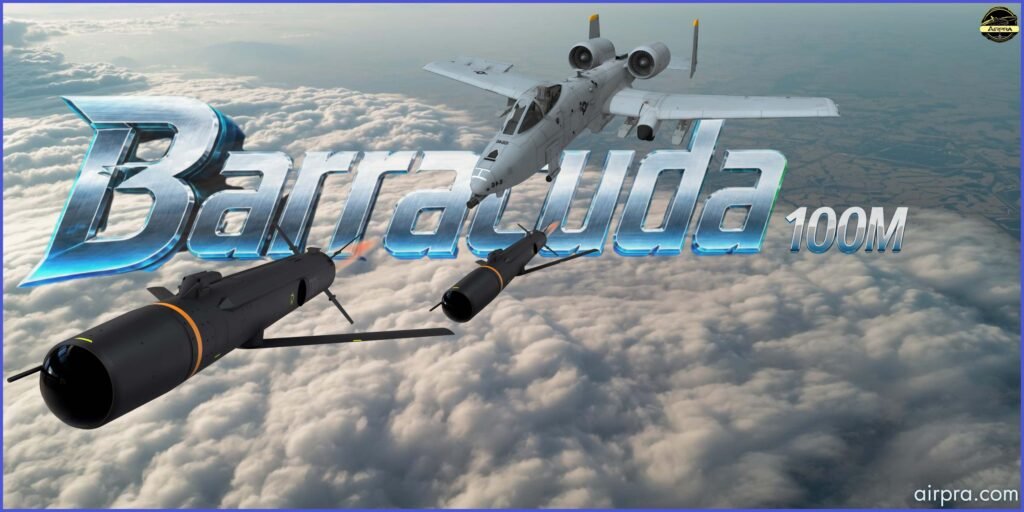
Barracuda-100M — The Smaller Predator
At the entry point of the family sits the Barracuda-100M.
It is the smallest member of the Barracuda-M family, but its compact size does not mean limited capability.
Based on reported figures, the 100M offers approximately 120 nautical miles of range and a payload capacity of about 35 pounds, or 16 kilograms. Its turbojet-powered airframe has a claimed top speed of roughly 568 mph, although actual performance would depend on launch conditions and mission profile.
The variant is being developed for multiple launch concepts, including ground-based systems, Rapid Dragon, and rotorcraft such as the AH-64 Apache and AH-1Z Viper.
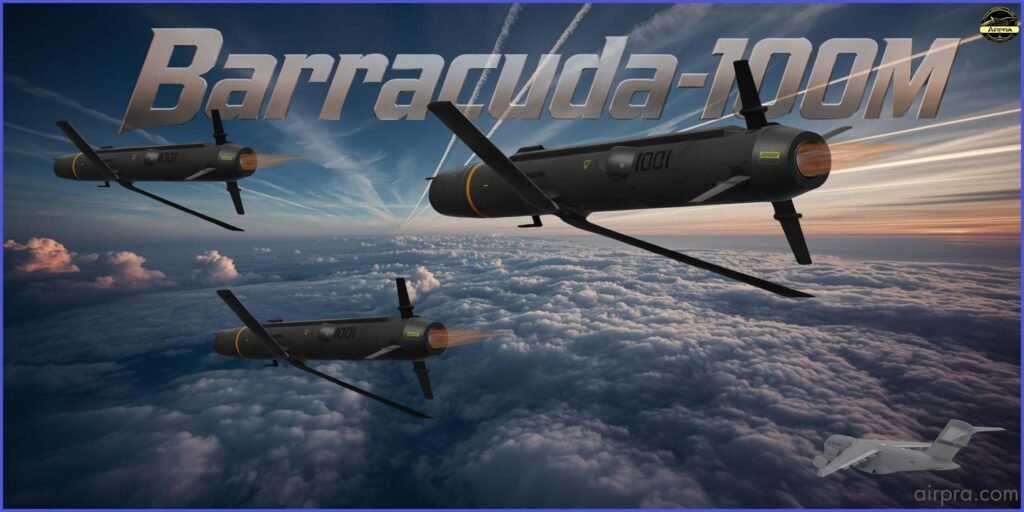
The 100M has also entered U.S. Army testing under the High-Speed Manoeuvrable Missile programme, where Anduril has demonstrated powered flight, expanded the vehicle’s flight envelope, autonomous mission execution and terminal guidance manoeuvres.
That means the 100M is no longer simply a concept on a presentation slide. It has progressed into flight testing and technology demonstration against operational requirements.
And it is already demonstrating the philosophy behind the wider family: a relatively compact autonomous weapon designed to reach well beyond the engagement ranges traditionally associated with tactical missile systems.
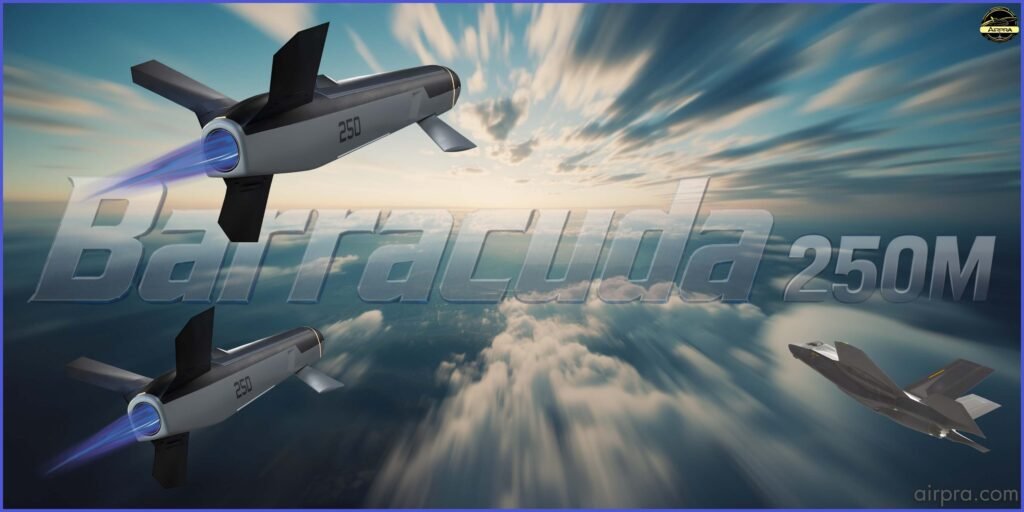
Barracuda-250M — The Tactical Sweet Spot
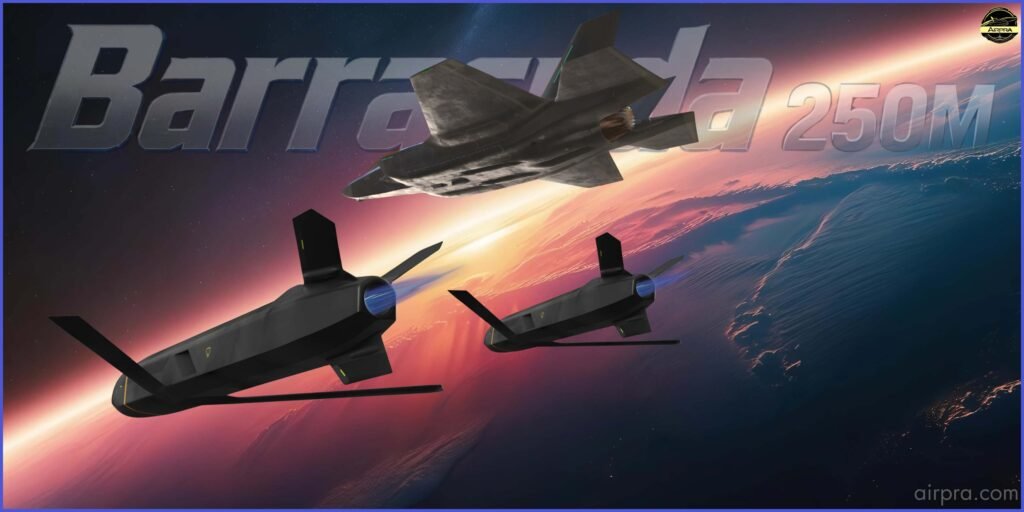
Move one step higher, and we arrive at the Barracuda-250M. This version carries roughly the same 35-pound payload as the 100M and has a claimed top speed of about 568 mph, but offers significantly greater range — around 200 nautical miles when air-launched, with a shorter range expected from surface launch.
And this is where Barracuda becomes particularly interesting for fighter aircraft.
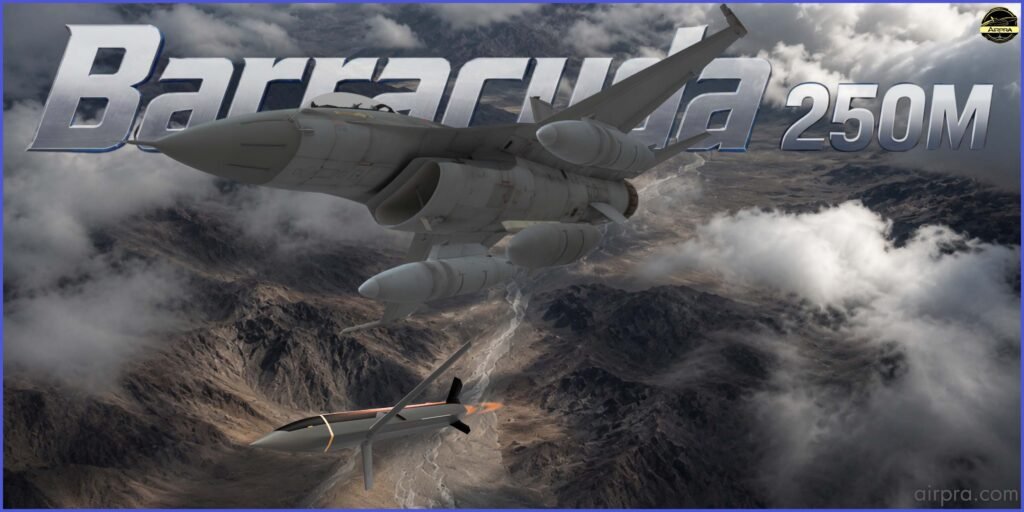
Anduril has presented the 250M as a weapon designed for potential carriage by tactical aircraft, including internal carriage within the F-35’s weapons bay. It can also be considered for external carriage on aircraft such as the F-15E/EX, F-16 and F/A-18, while other launch concepts could include HIMARS/MLRS-class ground systems and maritime platforms.
Now think about what that means. One basic weapon architecture — adapted for different launch environments. ___ Air. ___ Ground. ___ Potentially, sea. And all connected through a common software-defined architecture.
That is precisely the kind of flexibility traditional weapon programmes have often struggled to achieve without developing multiple specialised missile families.
Barracuda-500M — The Long-Range Hammer
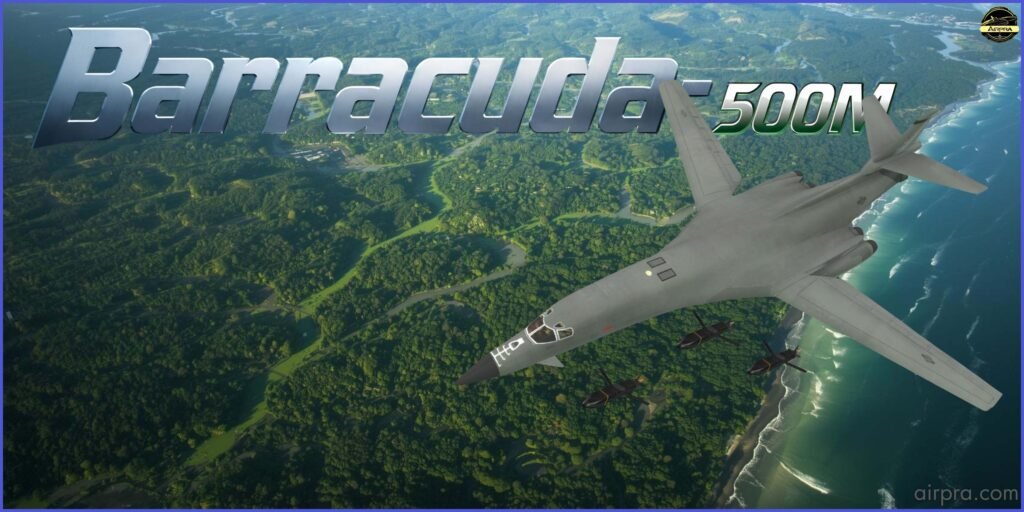
The largest member of the family is designed to deliver more than 500 nautical miles of range — over 900 km — with a payload of approximately 100 pounds (45kg) at a subsonic speed of around Mach 0.74. It is designed for air launch from a wide range of major fighter aircraft and bombers. And that puts it into a much more serious long-range strike class.
So, in 2025, the U.S. Air Force selected Barracuda-500 for its Enterprise Test Vehicle effort, with Anduril planning flight demonstrations of multiple vehicles communicating with one another and executing collaborative autonomous behaviours.
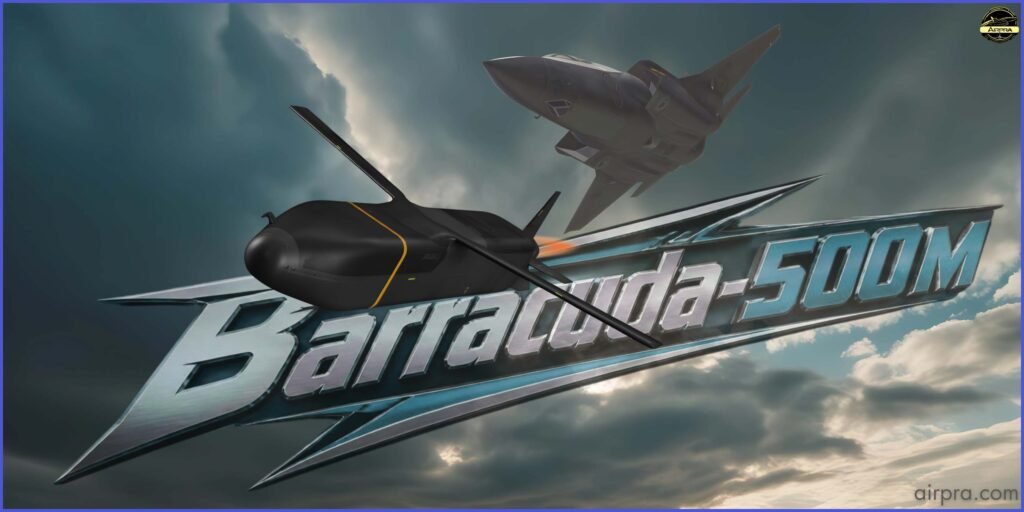
But the biggest development came in 2026, after the lessons learned from the Iran war. The surface-launched containerised version of Barracuda-500M moved from concept toward large-scale procurement, with Anduril and the U.S. government establishing a framework for a minimum of 3,000 missiles for the U.S. Army, and a maximum only God knows.
And this version comes with a striking launch concept. Imagine up to sixteen missiles housed inside a standard 20-foot ISO container, transported directly to the launch point and ready for action. But the real advantage comes from the software behind it.
Barracuda-500M can work with existing fire-control systems, while Anduril’s Lattice for Mission Autonomy can provide the networked intelligence needed to coordinate missions, support autonomous decision-making, and enable collaborative behaviour between systems.
Now imagine what that means in a high-intensity conflict. Not one missile searching for one target. But potentially large numbers of autonomous weapons coordinating their behaviour across a battlespace.
Endgame Analysis
The New Economics of Precision Strike
Barracuda-M is not just about range, speed, or payload. Its real innovation lies in the idea behind it — shifting precision strike from an exquisite capability towards an industrial-scale one. A weapon designed to be affordable enough for large-scale production, autonomous enough to reduce dependence on constant human control, and flexible enough to operate across different launch platforms.
Because in the next major conflict, the question may no longer be simply how capable each missile is — but how many capable missiles you can afford to keep firing.
And that could be the real weapon behind Barracuda-M.