In today’s modern battlespace, precision is not just an advantage—it’s a necessity. Rafael Spice is a prime example of how smart technology is redefining aerial warfare. With its advanced electro-optical and GPS-guidance systems, it enables air forces to strike targets with pinpoint accuracy, even in GPS-denied or adverse-weather conditions.
Rafael Spice Proves Why Precision Wins Wars by turning traditional unguided bombs into lethal, intelligent weapons. This minimises collateral damage while ensuring mission success in high-risk environments.
By enhancing operational flexibility and accuracy, Rafael Spice has become a vital asset in modern combat, where strategic precision matters more than sheer firepower.
Precision Strikes, One Common Weapon: The Rise of Rafael Spice
If you remember, in February 2019, the Pulwama terror attacks carried out by Pakistan-backed terrorists left 40 Indian paramilitary personnel dead. This prompted airstrikes deep into Balakot by the Indian Air Force, whose Mirage 2000s targeted Jaish-e-Mohammed militant training camps.
During the 2021 Israel–Palestine crisis, the Israeli Air Force used precision-guided munitions (PGMs) against the Al-Sharouk Tower in Gaza. In the Israel–Hezbollah conflict in 2023, the Israeli Air Force conducted precision strikes against Hezbollah facilities.
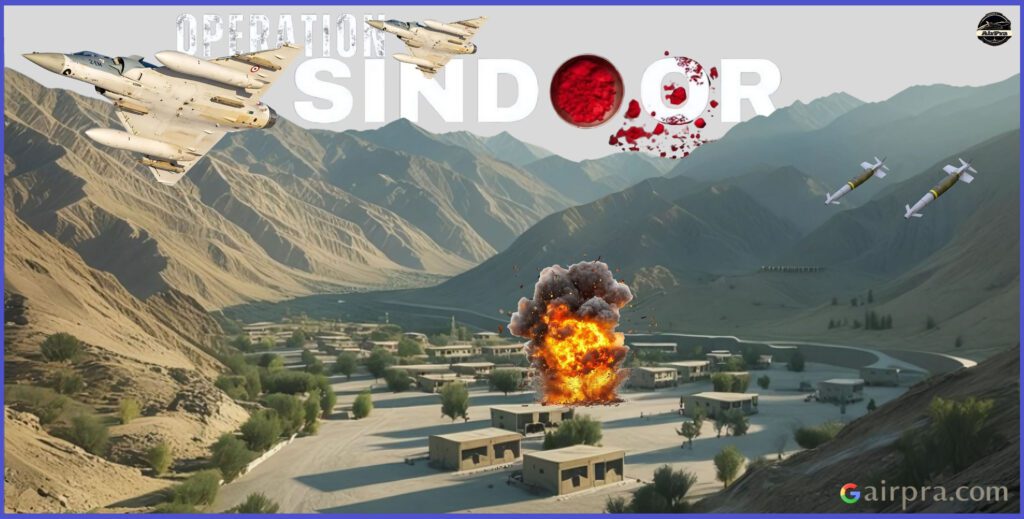
On May 7, 2025, the Indian Air Force executed Operation Sindoor, a daring and calculated retaliation against the horrific Pahalgam terror attack. With unmatched precision, Indian fighter jets penetrated deep into Pakistan-controlled territory, striking key terrorist infrastructure.
Just weeks later, on June 13, 2025, Israel launched a series of meticulously coordinated airstrikes targeting Iranian nuclear enrichment sites—once again showcasing the power of air dominance.
Amidst the array of advanced air-launched weaponry deployed by both the Indian and Israeli Air Forces, one weapon emerges as a common thread between these two bold operations. Can you guess what it is? That’s right—it’s the Rafael Spice precision-guided munition, a game-changer in modern aerial warfare.
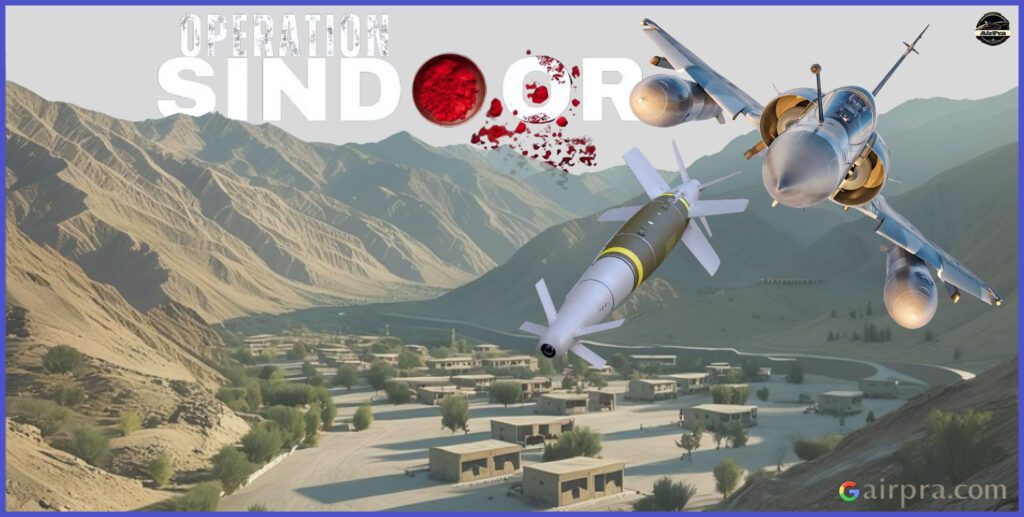
Smart, Precise Impact, Cost-Effective
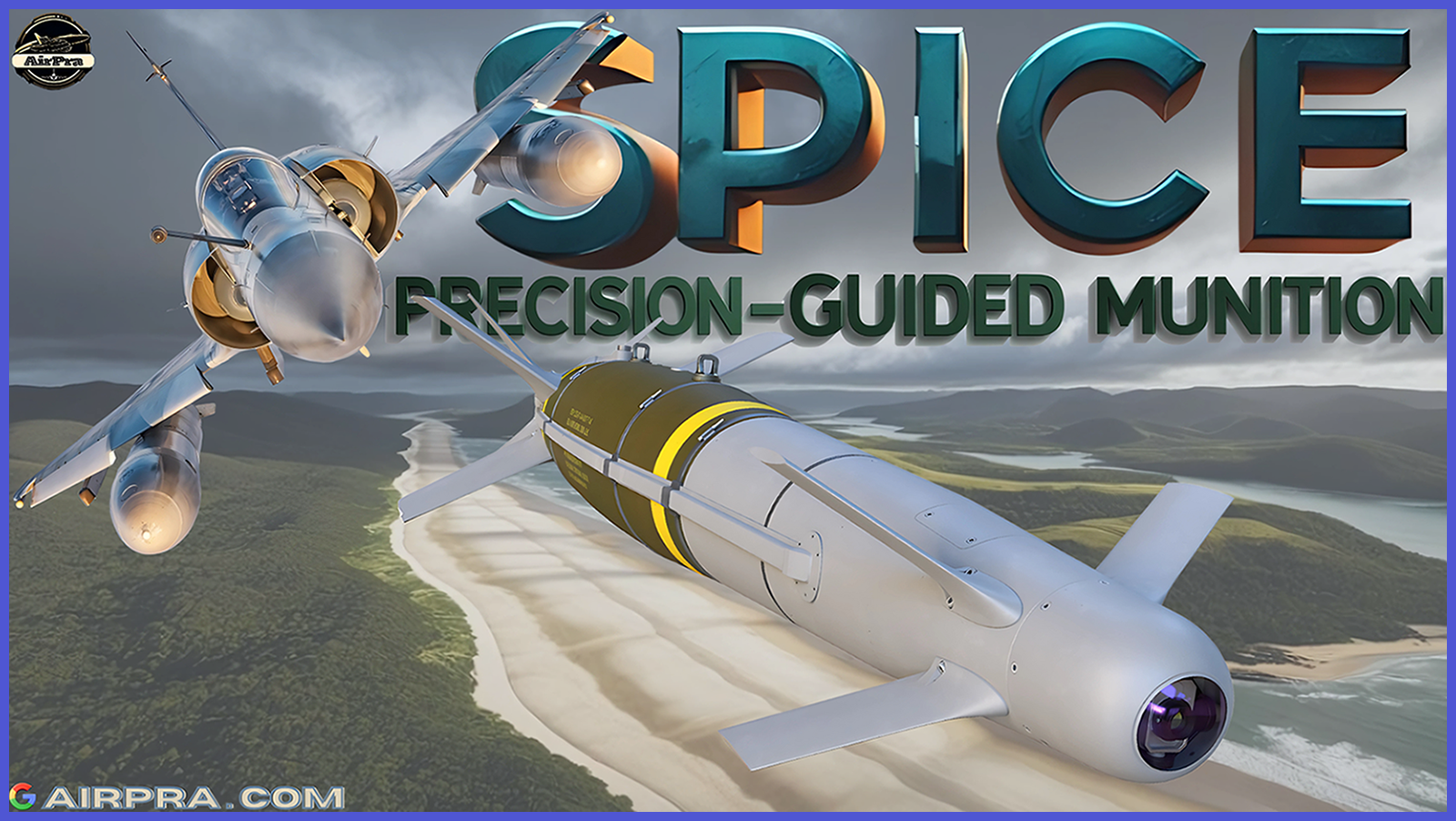
The Rafael Spice is a family of advanced precision-guided munitions developed by Israel’s Rafael Advanced Defence Systems. Designed to convert standard unguided free-fall bombs into smart, guided weapons, Spice uses electro-optical and GPS guidance to deliver pinpoint accuracy, even in GPS-denied environments.
It achieved initial operational capability in 2003 with Israeli Air Force F-16 squadrons. Today, it is widely adopted by air forces around the world, including those of India and Israel, and has proven effective in various real-world combat scenarios.
With variants such as the Spice 250, Spice 1000, and Spice 2000, this weapon system plays a crucial role in modern air-to-ground warfare.

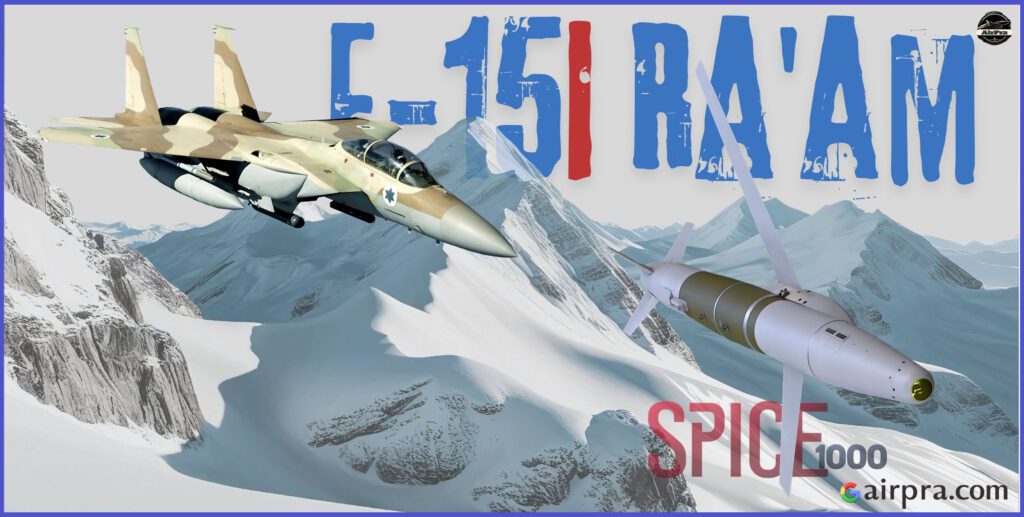
The Rafael Spice family is compatible with a wide range of combat aircraft, including the F-15E Strike Eagle (F-15I Ra’am), F-16 Fighting Falcon (F-16I Sufa), and the IAF’s Mirage 2000.
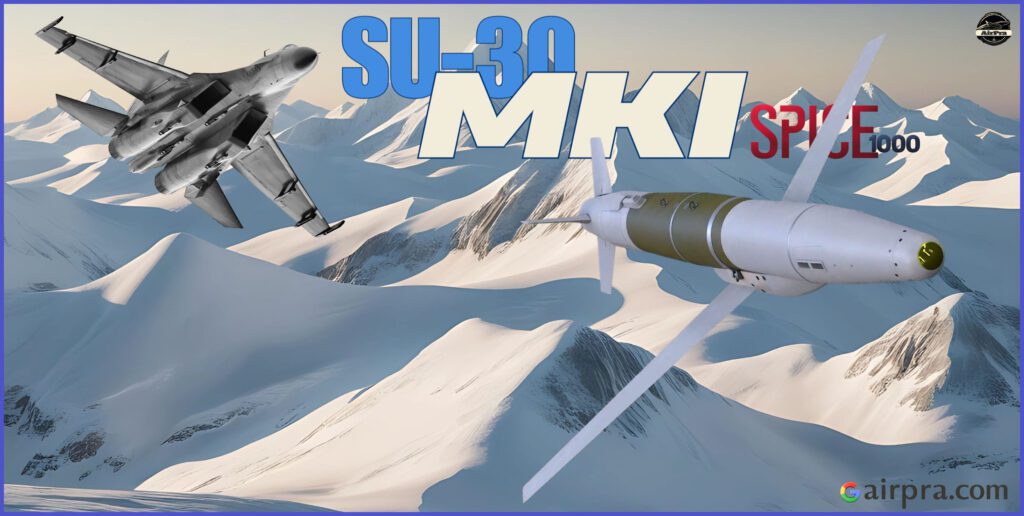
According to reports, the IAF is actively testing Spice integration on the HAL Tejas, and plans are underway to integrate the munition with both the Su-30MKI and the upcoming Tejas Mk2. However, Israel can modify its F-35I “Adir” for indigenous weapons integration, unlike other F-35 operators restricted by U.S. controls.

Precision in Every Bolt: The Anatomy of the Rafael Spice Arsenal
Spice 250
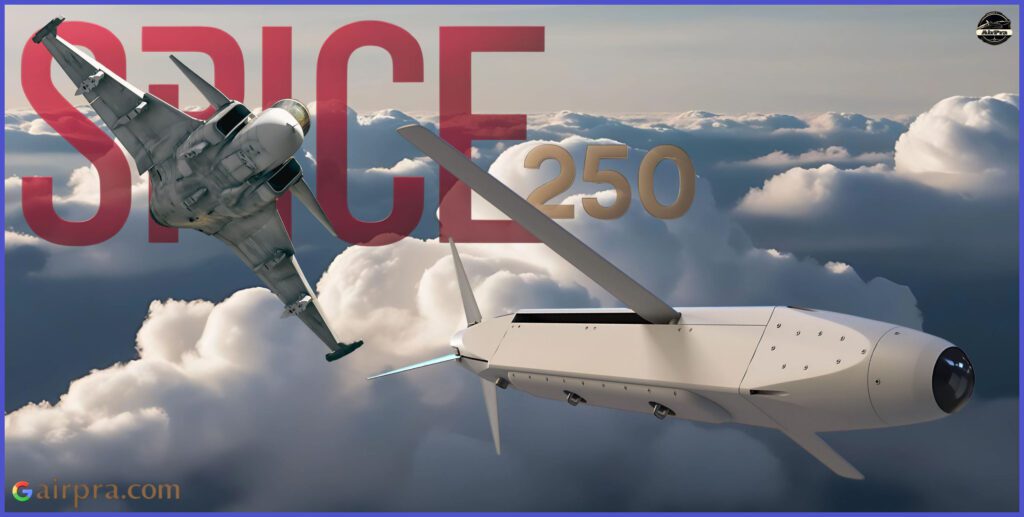
The Spice 250 is the lightest and most compact member of the Rafael Spice family. Weighing approximately 113 kg (249 lb), it is designed for the precision engagement of light to medium-armoured targets. It features a deployable wing set that allows it to glide up to 100 km (62 mi) from the release point, providing aircraft with a significant stand-off range.
The Spice 250 employs a multi-sensor guidance system, including GPS/INS and an electro-optical scene-matching seeker for terminal guidance. It is designed to operate effectively in both day and night, as well as in adverse weather conditions.

This advanced munition features an in-flight communication system that enables real-time updates to its trajectory, allowing operators to redirect it toward fixed, moving, or temporarily located targets even after it has been launched.
Its relatively small form factor makes it suitable for being carried in higher quantities by strike aircraft, significantly enhancing their loadout efficiency.
Systems like the Smart Quad Rack (SQR) take full advantage of this capability by accommodating up to four Spice 250 bombs on a single pylon, multiplying the aircraft’s strike potential. The warhead is engineered for dual effects: it can deliver either fragmentation for anti-personnel and soft-target impacts or penetration against fortified structures.
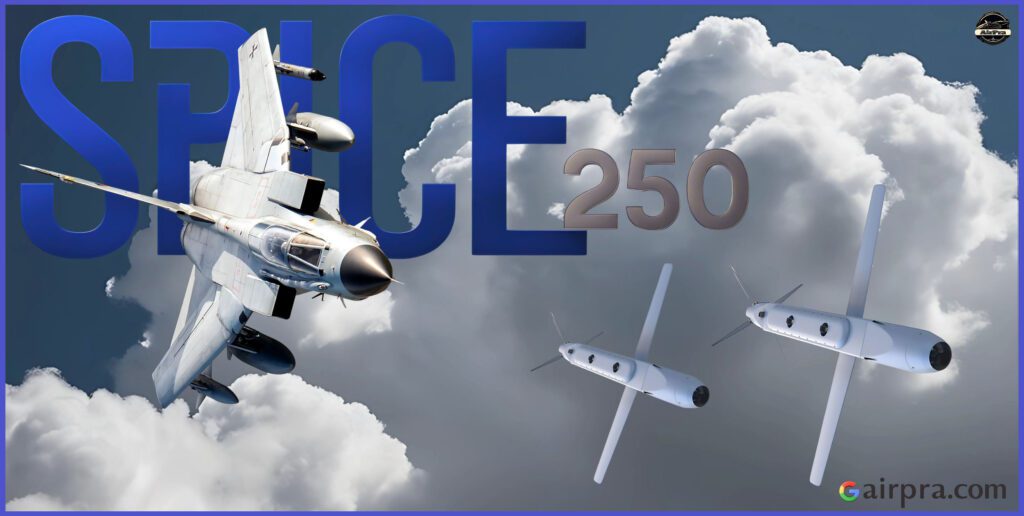
Additionally, the fuse mechanism offers flexibility, with options to be pre-programmed or selected mid-flight by the pilot. With a circular error probable (CEP) ranging between just 1 and 3 meters, the weapon delivers exceptional accuracy, even under challenging operational conditions.
The Spice 250 ER is an extended-range variant of the Spice 250, developed by Rafael to offer significantly enhanced stand-off capability. It incorporates a micro-turbojet engine, enabling it to achieve a range of over 150 km (93 miles).

Spice 1000
The Spice 1000 is a medium-weight smart munition developed around the American MK-83 general-purpose bomb, which weighs approximately 454 kilograms (1,000 pounds). It blends cutting-edge guidance systems with a penetrating warhead, making it suitable for engaging a diverse set of target types.
The weapon offers a stand-off launch range of about 100 to 125 kilometres, providing significant tactical reach.
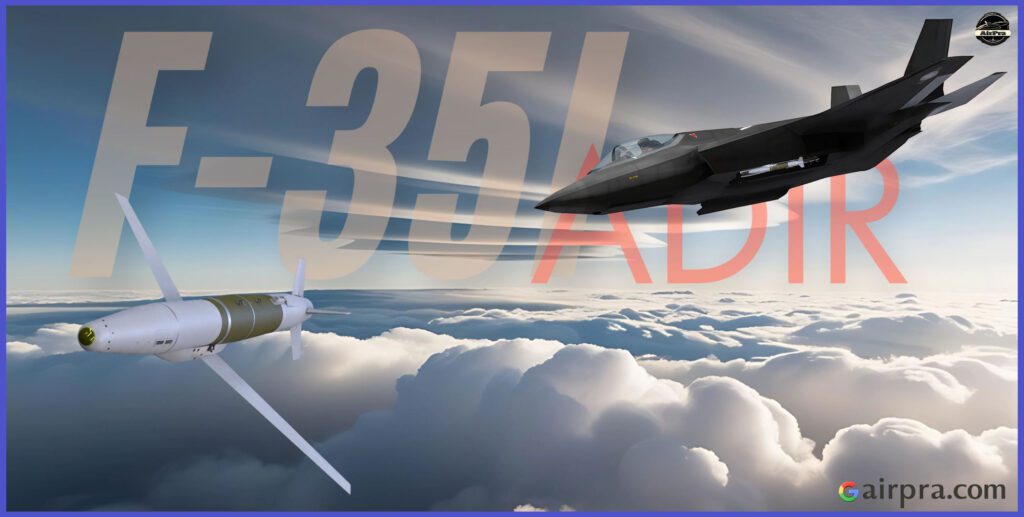
Equipped with dual-mode guidance, it combines satellite-based navigation (GPS/INS) with an electro-optical image-matching system, enabling high precision even in scenarios where GPS signals are jammed or unavailable.
The munition supports autonomous target recognition, allowing it to detect and lock onto preloaded targets using reference imagery. Designed for all-weather, day or night operations, the Spice 1000 delivers remarkable accuracy with a circular error probable (CEP) of just 3 meters.
Spice 2000
The Spice 2000 is the heaviest variant in the Rafael Spice family, built around either the MK-84 general-purpose bomb weighing approximately 907 kg (2,000 lb) or the BLU-109 penetrator warhead. It is specifically designed to neutralise hardened and deeply buried targets, such as bunkers and fortified infrastructure.
The munition features a total of 12 control surfaces arranged in three groups—fore, mid-body, and tail—which enhance its aerodynamic stability and control. With a stand-off glide range of about 60 km, it allows aircraft to release the weapon from a safe distance, beyond the reach of medium-range enemy air defences.
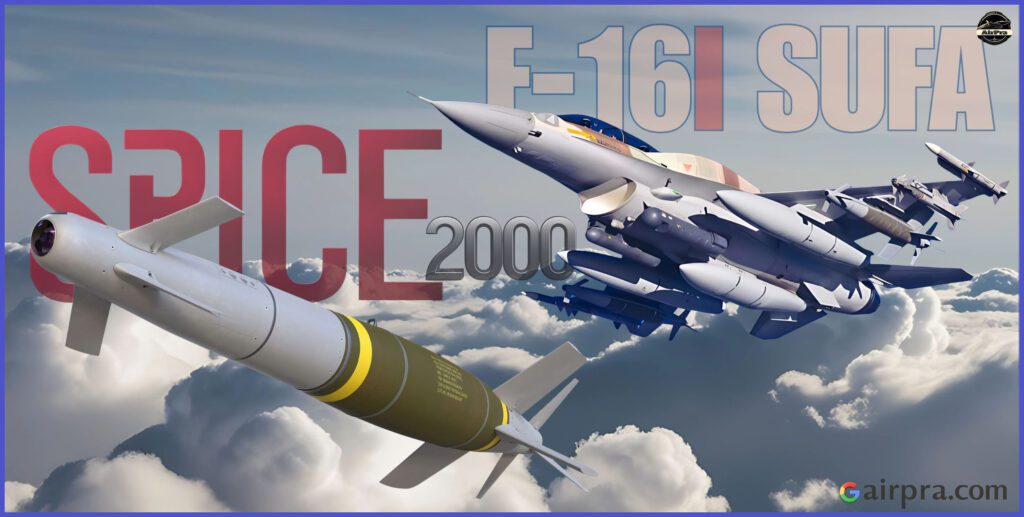
Similar to its lighter variants, the Spice 2000 employs a hybrid guidance system that merges GPS/INS navigation with electro-optical targeting, enhanced by scene-matching algorithms and automatic target identification.
This enables precise strike capabilities across a range of operational environments—including daylight, nighttime, and adverse weather—with an impressive circular error probable (CEP) of just 3 meters.
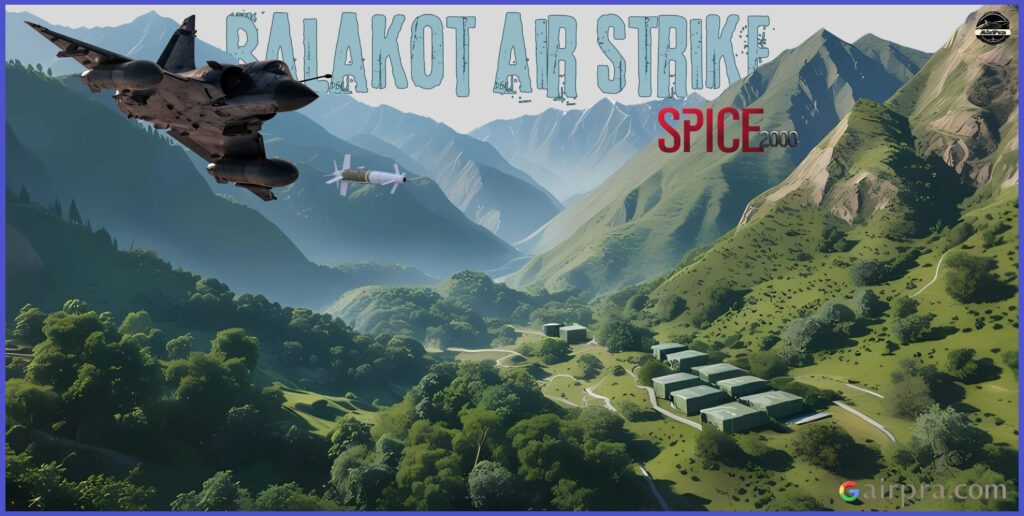
Designed for integration with both single- and dual-seat fighter jets, the Spice 2000 gained international attention during the 2019 Balakot airstrike, when the Indian Air Force used it to eliminate terrorist training camps deep within hostile territory accurately.
How Rafael Gave Bombs a Mind of Their Own—Let’s Reimagine Modern Airstrikes
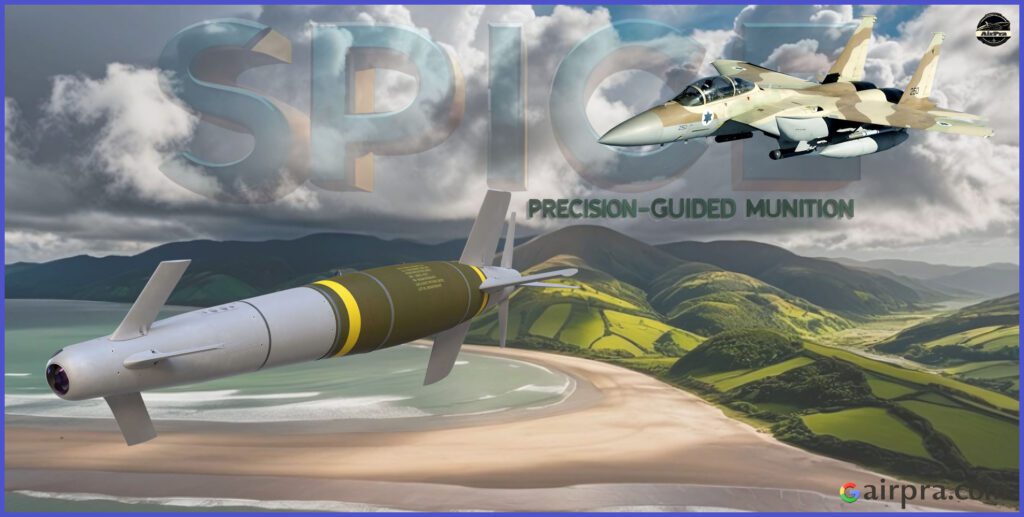
The Rafael Spice munition doesn’t just fly—it thinks. Once released from the aircraft, it becomes a hunter, silently navigating the skies using an Inertial Navigation System (INS) and GPS to close in on its target. But the real magic begins in the final moments.
With a powerful electro-optical seeker and preloaded target imagery, Spice scans the ground below, matching real-time visuals with memory, like a digital assassin recognising its mark. Even if GPS signals are jammed, it doesn’t miss a beat.

The Spice 250’s data link allows real-time retargeting mid-flight, turning every strike into a smart decision. It can dodge, correct, and even distinguish between similar targets, ensuring the right hit every time.
With a stand-off range of 100 km, or over 150 km for the Spice 250 ER, it delivers a devastating punch from far beyond enemy reach. Spice doesn’t just strike—it chooses how to strike.
A Quick Message to Our Readers
Some details in our articles may change over time. For the most accurate and up-to-date information, we recommend consulting additional sources as well.
We’re passionate about providing you with trusted insights into military systems and global developments. Your support helps us continue this work. When you purchase through our affiliate links, you’re helping us grow while receiving high-quality products in return.
Your thoughts matter to us. If there’s a topic or defence system you’d like to learn more about, let us know in the comments—we’ll do our best to cover it.
Thank you for being part of our journey. We appreciate your time and interest—happy reading!