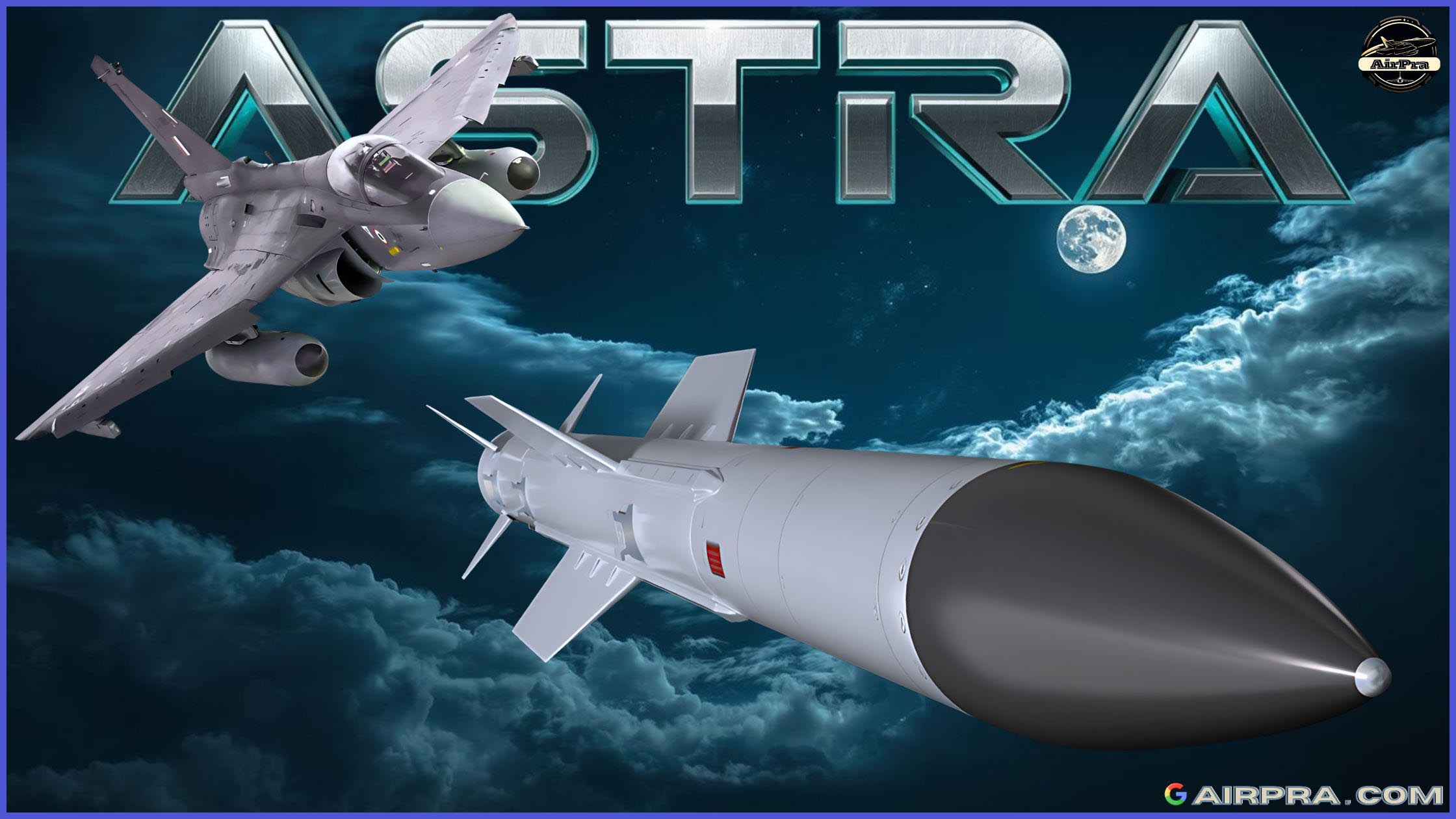
High above the clouds, where speed and precision decide the fate of battles, only the most advanced weapons can secure dominance. Designed to empower India’s aerial warriors with that decisive edge, the Astra is more than a missile—it is a symbol of technological mastery and supremacy in the skies.
Astra Missile Striking Fear Beyond Visual Range is not just a phrase; it reflects the weapon’s ability to hunt down threats long before they appear to the eye. With its cutting-edge seeker, powerful propulsion, and deadly precision, Astra ensures enemies are neutralised before they can even react.
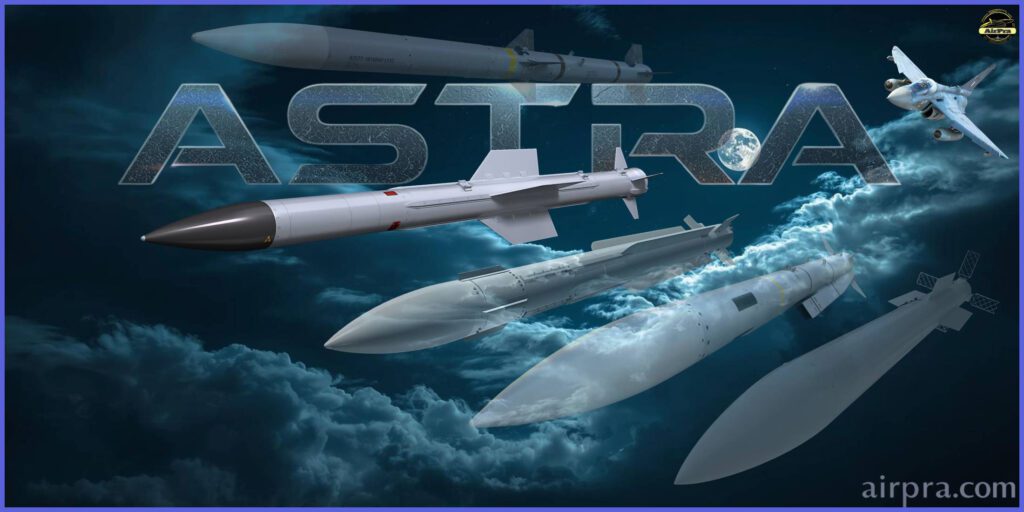
Mastering Aerial Warfare: The Power and Precision of Astra
In the unforgiving battlespace of 21st-century warfare, especially in the high-stakes domain of aerial combat, supremacy begins with the ability to detect and track enemy threats—whether advanced fighter jets or low-observable drones—from staggering distances.
Yet, detection is merely the opening act. The ultimate test lies in neutralising these adversaries with unerring precision from beyond visual range, long before they can strike.
Such a mission demands nothing less than a state-of-the-art missile, armed with the latest technologies: an advanced AESA radar seeker for razor-sharp terminal guidance, and a secure two-way data link enabling mid-course corrections from the launch aircraft or powerful AEW&C platforms.
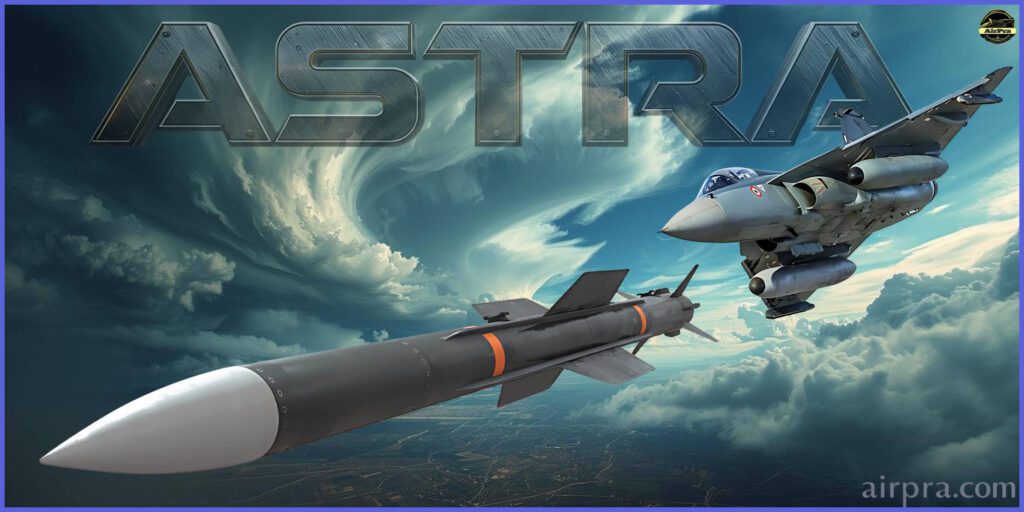
This combination ensures devastating accuracy even against the most agile and evasive targets. Only a select few missiles on the planet possess such dominance—and rising among them is India’s pride, the DRDO-developed Astra missile: a formidable beyond-visual-range air-to-air weapon, meticulously engineered to seize control of the skies and tip the balance of aerial warfare.
The Astra missile is India’s first indigenous, all-weather beyond-visual-range air-to-air missile (BVRAAM), developed by DRDO to boost the aerial dominance of the Indian Air Force and Navy. With variants capable of striking from 500 m to 340 km, Astra offers unmatched versatility.
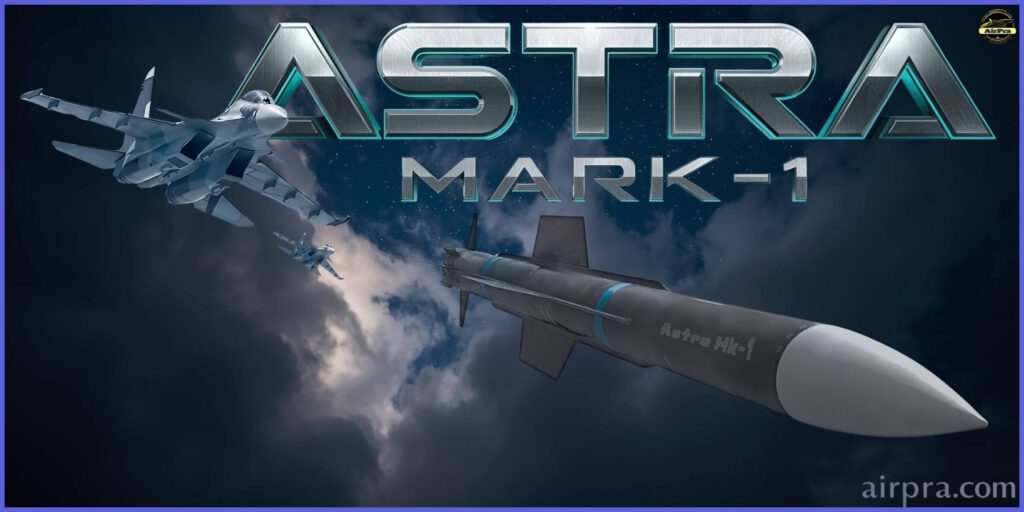
Its first version, Astra Mk-1, is already integrated with the Su-30MKI, with plans to arm a wide range of Indian and Russian-origin fighters across the services. In 2024, the Astra program achieved a major milestone when the missile received clearance for full-scale production for frontline service with the Indian Air Force.
The Birth of Astra: From Development to Production Timeline
Work on the Astra Mk-1 first took shape in 1990 with the completion of a pre-feasibility study, planting the seeds of India’s journey toward an indigenous beyond-visual-range air-to-air missile.
Yet, it was only in 2004 that the project received its long-awaited green light, backed by a budget of ₹955 crore (approx. US$400 million in 2023). Aerodynamic characterisation trials were undertaken at the renowned National Aerospace Laboratories’ Trisonic Wind Tunnel Facility, adding scientific depth to the endeavour.
Spearheaded by the Defence Research and Development Laboratory (DRDL), with vital contributions from Hindustan Aeronautics Limited (HAL) and the Electronics Corporation of India Limited (ECIL), the program symbolised a collective stride in defence innovation.
The initial Astra Mk-1 prototype—reportedly weighing 300 kg (660 lb) with a modest range of 25–40 km (16–25 mi)—was envisioned for integration with the HAL Tejas. Marking a significant milestone, its first test flight took place in May 2003, setting the stage for India’s leap into the era of advanced aerial weaponry.
The journey of Astra was not without turbulence. By 2006, the missile faced a daunting setback, as control instabilities and disappointing high-altitude performance forced a complete redesign.
The original configuration, with its four cruciform short-span, long-chord wings, was abandoned in favour of a bolder, more aerodynamic form—cropped delta wings near the nose, coupled with an enhanced propulsion system that promised renewed hope.
Yet, when this second design was tested in 2008, expectations once again fell short, and doubts loomed over the project’s future. Refusing to surrender, India’s scientists and engineers pressed on with relentless determination.
By 2013, they unveiled a third evolution of Astra, where control, guidance, and propulsion were masterfully re-engineered. This time, the missile emerged leaner and sharper—shedding nearly 130 kg (290 lb) from its original weight—while finally delivering the performance envisioned from the beginning.
Three triumphant ground launches proved its worth, followed by successful captive trials from a Sukhoi Su-30MKI in April 2013. This moment marked Astra’s transformation from a struggling prototype into a symbol of resilience and technological mastery.
By 2017, the Astra Mk-1 had successfully cleared its final development trials, paving the way for production at BDL’s Bhanur facility in Telangana—a landmark moment in India’s quest for self-reliance in advanced weaponry.
The journey gained further momentum in May 2022, when the Ministry of Defence sealed a ₹2,971 crore (US$383 million) contract with BDL to supply more than 350 missiles for both the Indian Air Force and the Navy, under the prestigious Indian Designed, Developed, and Manufactured (IDDM) category.
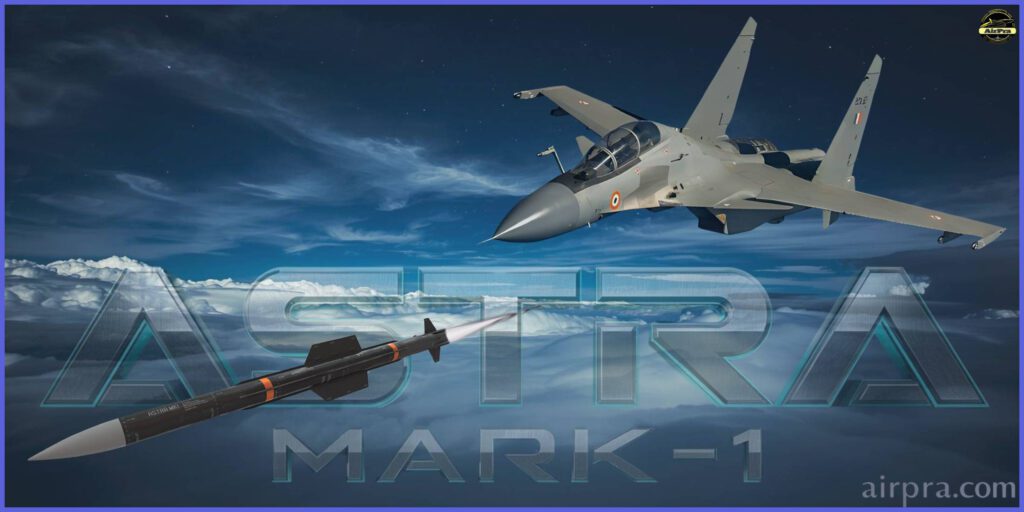
Valued at around ₹7–8 crore (US$950,000) per unit, Astra Mk-1 was envisioned to gradually replace Russian-origin long-range air-to-air missiles, signalling a decisive shift toward indigenous capability.
This vision culminated in a historic milestone on 4 August 2024, when the missile was formally cleared for full-rate production by Air Marshal Ashutosh Dixit at BDL’s Kanchanbagh Unit in Hyderabad—an event that not only validated years of perseverance but also marked Astra’s transformation from a bold concept into the pride of India’s skies.
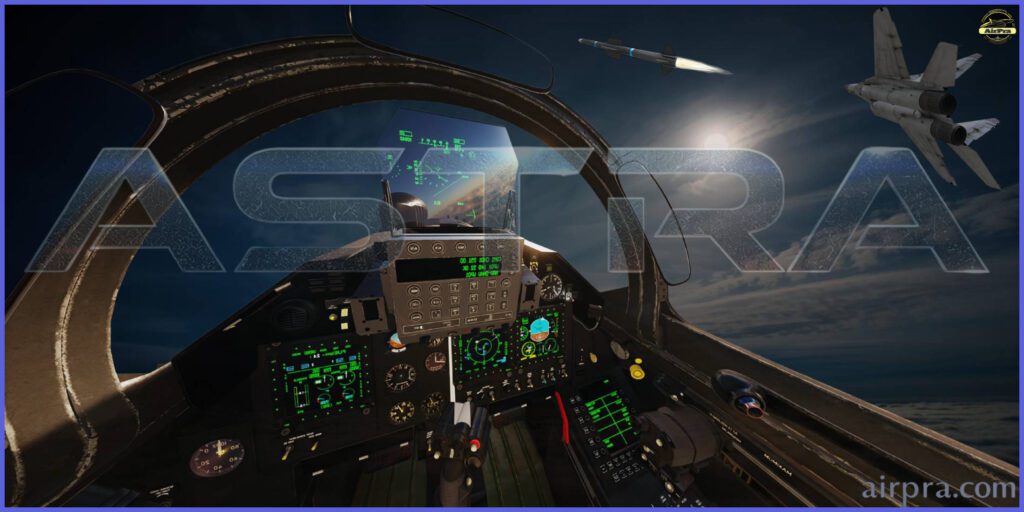
Beyond Visual Range: Full Specs of All 3 Astra AAM Variants
Astra Mark-1
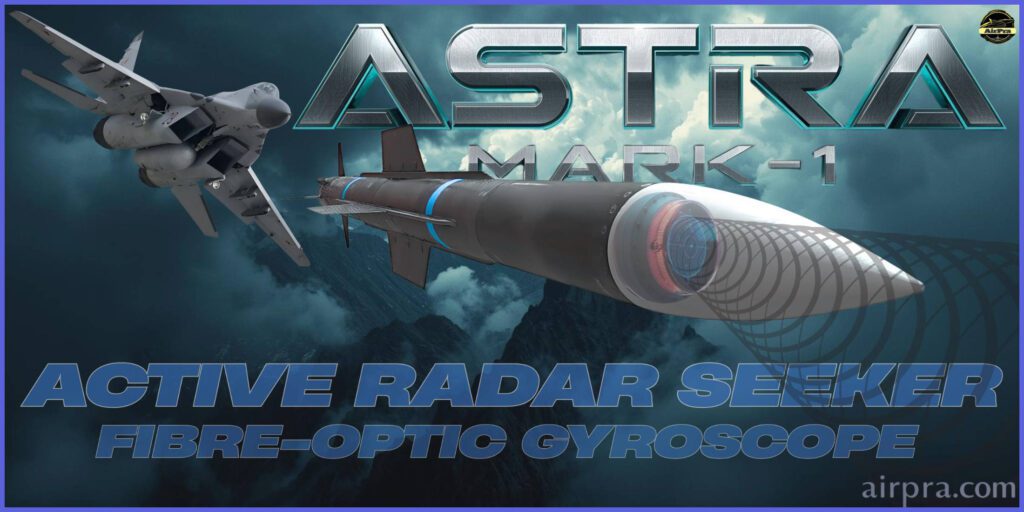
The Astra Mk-1 measures 12.6 ft (3.84 m) in length, has a body diameter of 178 mm (7.0 in), and a launch weight of 154 kg (340 lb). Guidance is provided by a fibre-optic gyroscope during the mid-course phase, while the terminal phase is handled by an active radar seeker with a lock-on capability of up to 25 km (16 mi).
The missile can receive mid-course updates via a secure data link. Its seeker can track targets with a radar cross-section of about 5 square metres from 15 km and supports off-boresight launches at angles of up to 45°.
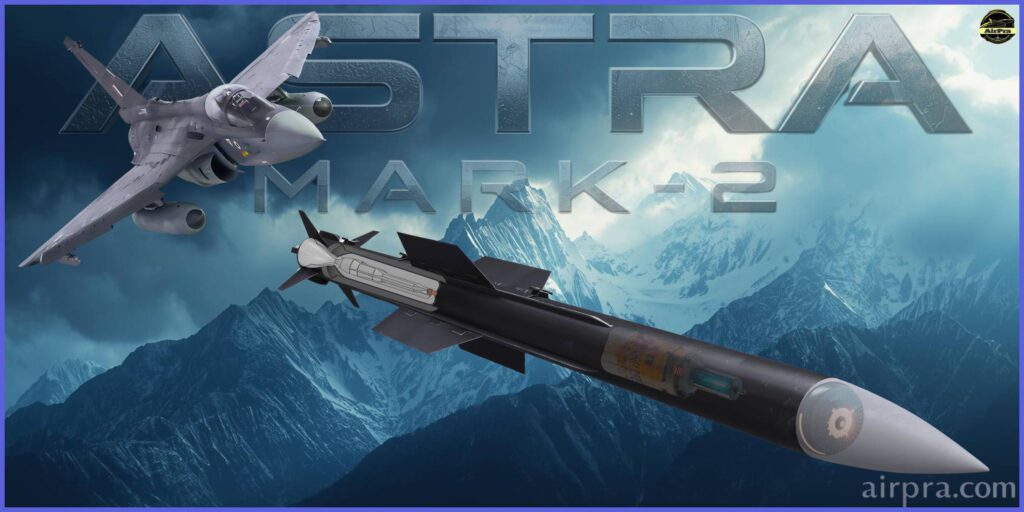
The missile is fitted with electronic counter-countermeasures to operate even when an adversary attempts to jam its seeker. It carries a 15 kg (33 lb) high-explosive pre-fragmented warhead triggered by a proximity fuse.
A smokeless solid-fuel motor propels the missile to speeds up to Mach 4.5, allowing operation from altitudes as high as 20 km (66,000 ft). Its maximum range is 110 km (68 mi) in head-on engagements and about 20 km (12 mi) in tail-chase mode; however, its maximum range is achieved when launched from at least 15 km (49,000 ft) altitude.
The weapon supports both autonomous and buddy-mode launches and can lock on to a target either before or after launch.
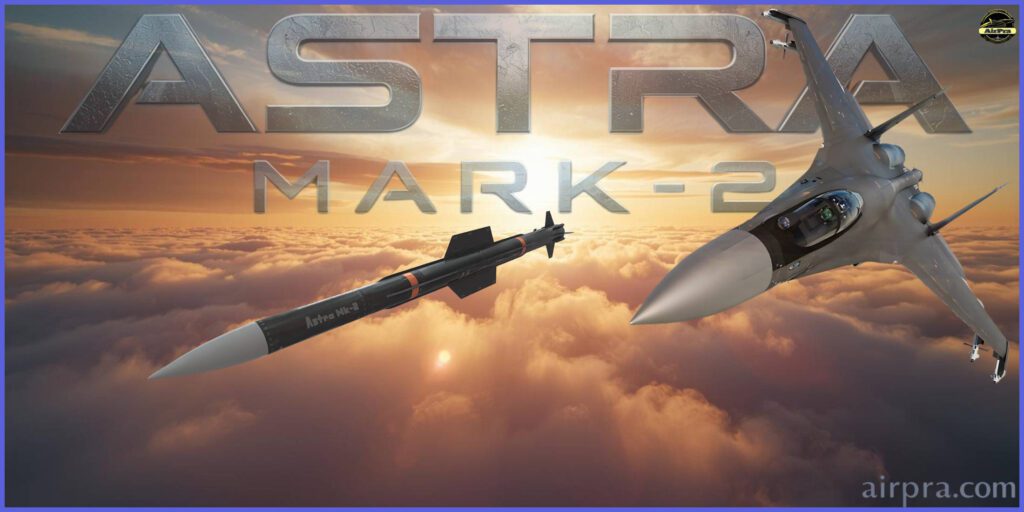
Astra Mark-2
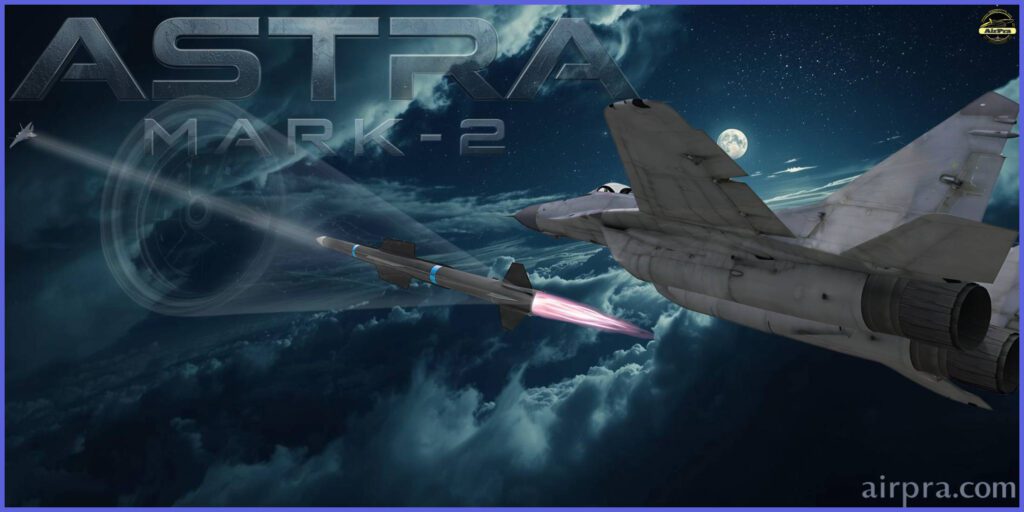
The Astra Mk-2 extends India’s aerial reach with the ability to strike targets at ranges of 130–160 km (81–99 mi), its effectiveness shaped by the altitude of launch. At its core lies an indigenously developed dual-pulse rocket motor, delivering sustained power across the engagement envelope.
Precision is ensured through a state-of-the-art laser proximity fuse, while an advanced AESA radar seeker sharpens its ability to track and destroy even the most elusive threats.
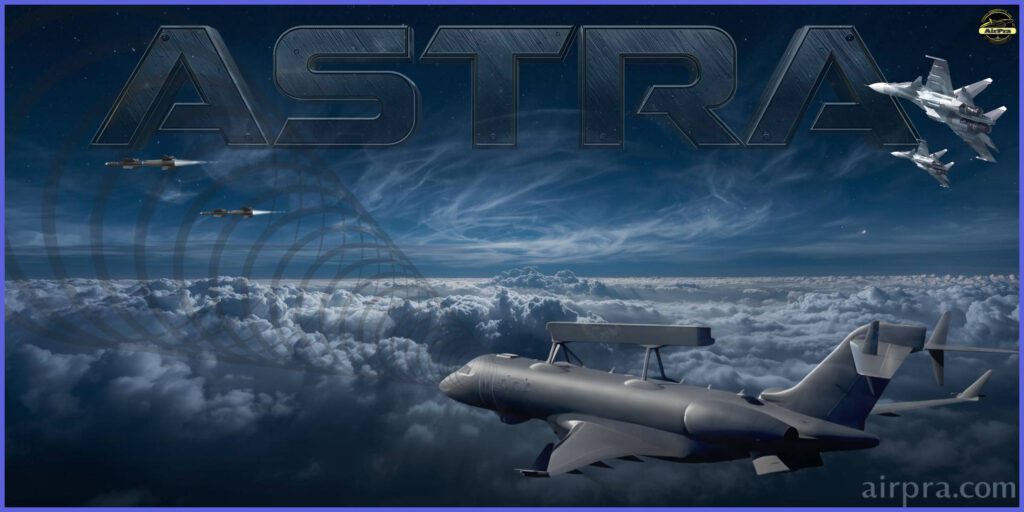
Remarkably, all this enhanced capability is achieved while retaining the dimensions and blistering speed of the Mk-1—proving that Astra Mk-2 is not merely an upgrade but a decisive leap in India’s air combat prowess.
Astra Mark-3 (Gandiva)
The Astra Mk-3 is currently in the trial phase as of 2025–26. It features an air-breathing propulsion system, known as the Solid Fuel Ducted Ramjet (SFDR), which distinguishes it from its predecessors. The missile measures 12.59 ft (3,838 mm) in length and has a diameter of 178–200 mm (7.0–7.9 in).
This throttleable propulsion system greatly extends its range, allowing engagements up to 340 km (210 mi) from an altitude of 20 km (66,000 ft) and 190 km (119 mi) from an altitude of 8 km (26,000 ft).
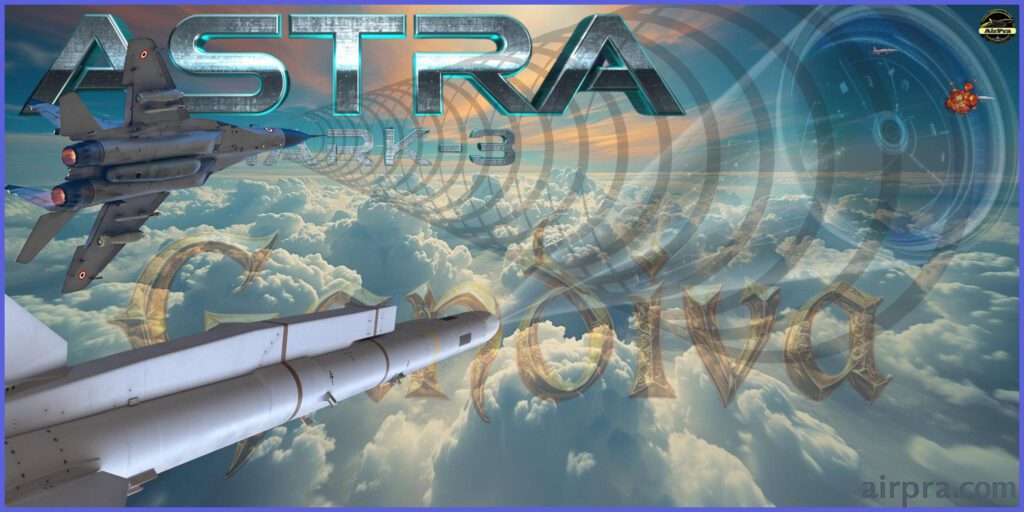
According to reports, the missile’s launch speed ranges from Mach 0.8 to 2.2, while its target impact speed ranges from Mach 2.0 to 3.6. It can engage highly manoeuvrable fighter aircraft at angles of attack up to 20 degrees.
With its ±10 km snap-up/snap-down capability, pilots can strike targets positioned above or below the launch aircraft. The missile uses a two-way data link for mid-course guidance from the launch platform or friendly AEW&C aircraft and relies exclusively on electronic counter-countermeasures throughout its entire flight.
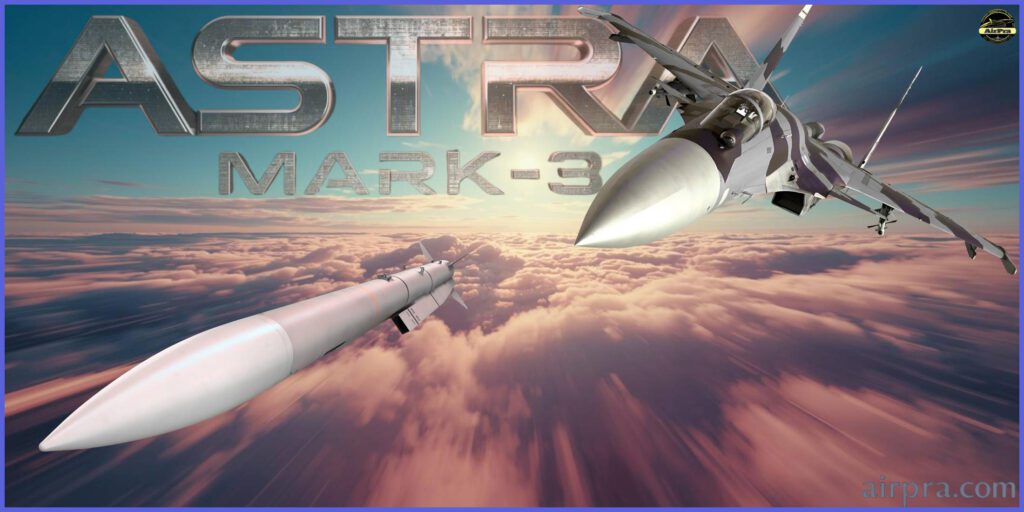
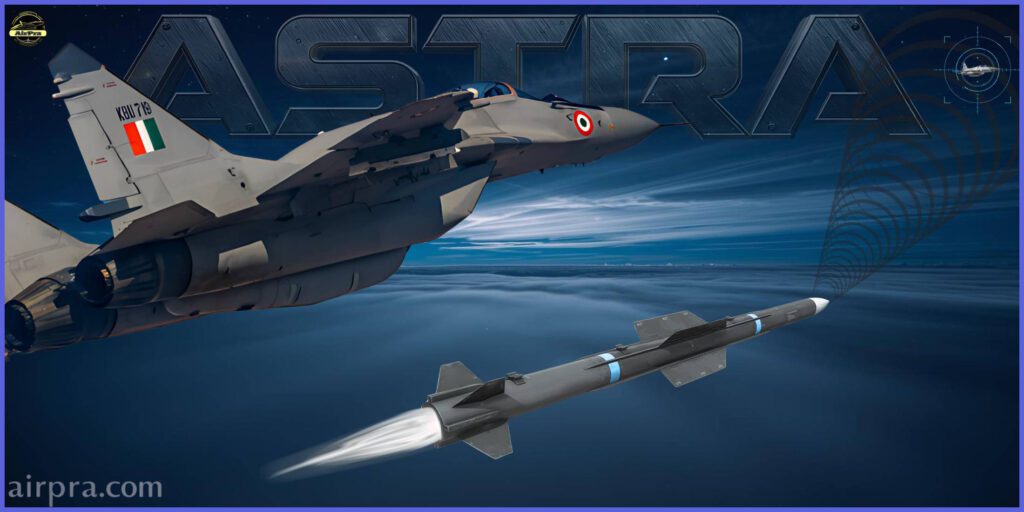
The Astra Mk-1 has already taken to the skies aboard some of India’s most formidable fighters, including the Sukhoi Su-30MKI, HAL Tejas, MiG-29UPG, and the naval MiG-29K. Its successor, the Mk-2, is now in Limited Series Production (LSP), undergoing rigorous testing and evaluation to ensure it meets the highest standards of precision and performance.
A Quick Message to Our Readers
Some details in our articles may change over time. For the most accurate and up-to-date information, we recommend consulting additional sources.
We’re passionate about providing you with trusted insights into military systems and global developments. Your support helps us continue this work. When you purchase through our affiliate links, you’re helping us grow while receiving high-quality products in return.
Your thoughts matter to us. If there’s a topic or defence system you’d like to learn more about, let us know in the comments—we’ll do our best to cover it. Thank you for being part of our journey. We appreciate your time and interest—happy reading!