Every time you catch a glimpse of an Israeli military jet soaring into action—be it an offensive strike or a defensive patrol—there’s a striking consistency that never goes unnoticed: two lethal air-to-air missiles, firmly mounted on the corner pylons.
They aren’t just for show—they stand as silent guardians, locked and ready, forming the jet’s first line of defence in hostile skies. Yes, we are talking about Advanced Aerial Warfare with Python 5 and Derby Missile, which showcases the pinnacle of modern air combat technology.
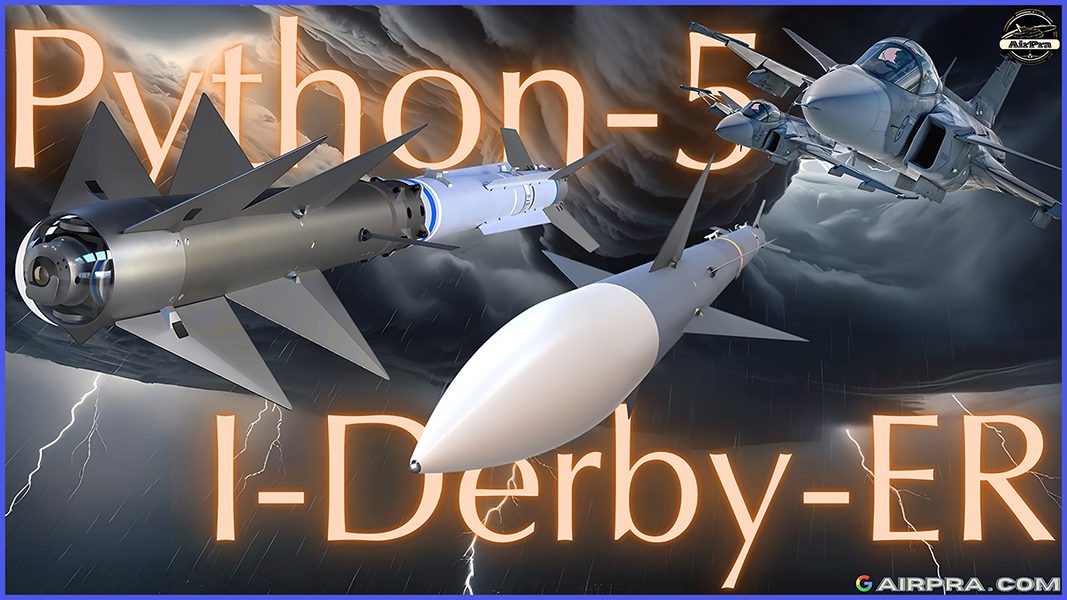
Designed for superior agility and precision, the Python 5 offers full-sphere engagement capability, striking threats from any direction with unmatched accuracy. Complementing it, the Derby missile brings beyond-visual-range lethality with its active radar guidance system, making it a formidable choice against agile enemy aircraft.
Together, they empower any aircraft with a decisive edge in contested skies, redefining how air dominance is achieved. Their integration reflects the evolution of smart weaponry—fast, flexible, and lethal—perfectly suited for the dynamic demands of 21st-century aerial warfare.
The Rise of Python: A Legacy of Air Superiority
The story of Rafael’s Python missile family began with the Shafrir program in the early 1960s, initiated to reduce Israel’s reliance on foreign air-to-air missiles. The first version, Shafrir 1, saw limited use and performed poorly during the 1967 Six-Day War, with no confirmed air combat kills.
However, its successor, Shafrir 2, proved highly effective during the Yom Kippur War in 1973. The Israeli Air Force launched 176 Shafrir 2 missiles, successfully downing 89 enemy aircraft. This success marked a turning point in Israel’s indigenous missile development and opened the door to significant export opportunities.
Building on this success, Rafael introduced a new generation of missiles in the late 1970s, which it named Python, specifically with exports in mind. The third missile in the series, the Python-3, marked a major leap forward with all-aspect targeting, improved agility, and extended range.
It was used effectively during the 1982 Lebanon War, where it was credited with downing 35 enemy aircraft.

Further improvements to Python-3 led to the development of Python-4 in the mid-1980s, which introduced helmet-mounted display (HMD) integration, high off-boresight capability, and helmet-mounted cueing.
These enhancements enabled pilots to lock onto targets far outside the aircraft’s nose. Python-4 also featured dual-band seeker technology, significantly increasing tracking accuracy and resistance to countermeasures.
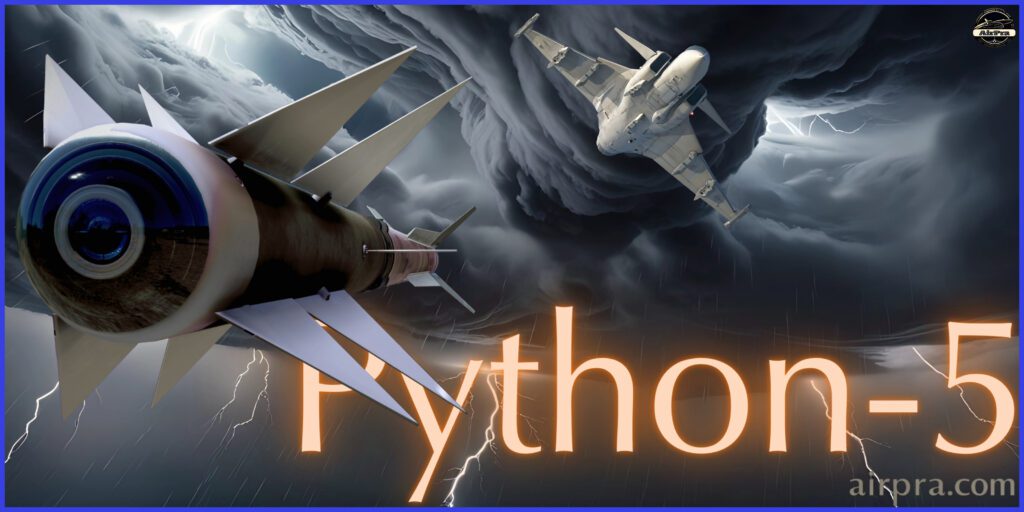
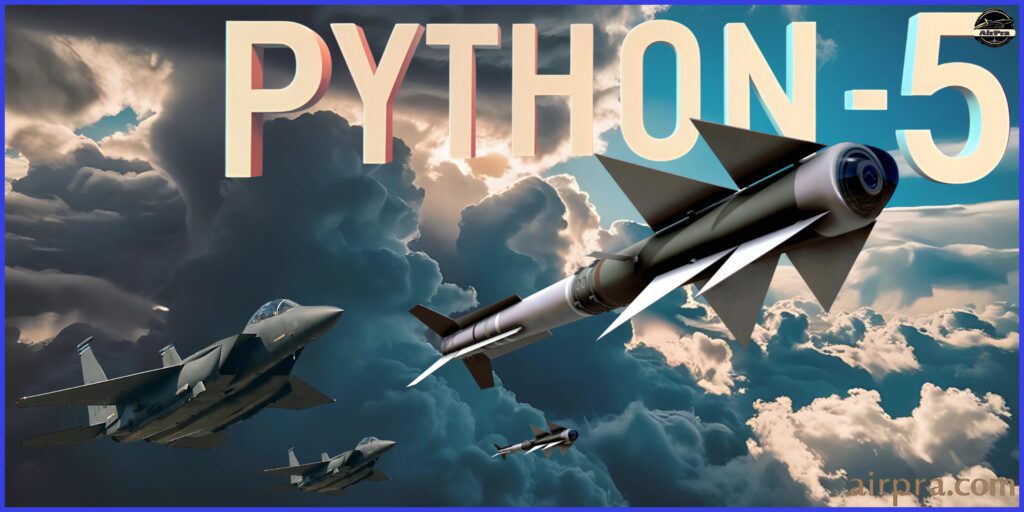
In the 1990s, Rafael began development of the fifth missile in the series, the Python-5. The most advanced variant to date, Python 5, officially debuted in 2003.
Featuring a dual-band imaging infrared seeker, lock-on after launch (LOAL) capability, and 360° engagement, it is considered one of the most capable within-visual-range (WVR) air-to-air missiles in the world today. Its success in combat-proven scenarios has led to its adoption by multiple air forces globally.

The Question Still Remains: Why Python?
Imagine a combat mission in the 21st century. A modern fighter jet takes off, armed with sophisticated weapons for a high-stakes operation. In that moment, one thing is absolutely essential—being prepared for self-defence.
Today’s adversaries are just as advanced, and survival often depends on what a pilot carries for close and long-range encounters in the sky. Understanding these challenges, Rafael Advanced Defence Systems, with decades of combat-proven experience, developed two powerful solutions.

The Python is a short-range air-to-air missile designed for quick, lethal strikes, while the newer Derby is built to engage threats at longer distances. The Python family is known for its deadly precision and unmatched agility.
Over the years, it has evolved into its most advanced version yet—the Python-5, widely regarded as one of the most effective dogfighting missiles in the world. In intense close-range air battles, where split seconds matter, it gives pilots an absolute critical edge.
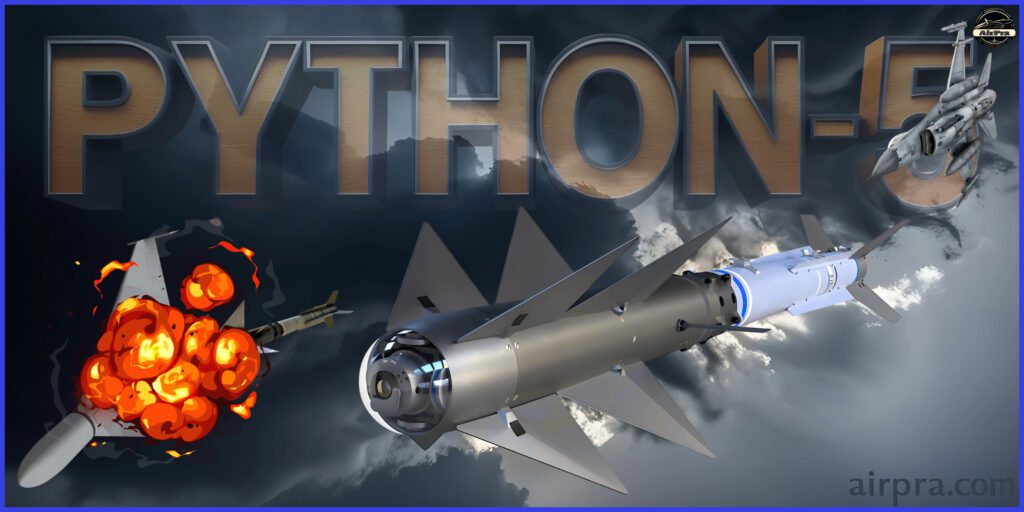
Trusted Worldwide: The Rise of Python-5 and I-Derby ER in Modern Air Forces
Python-5
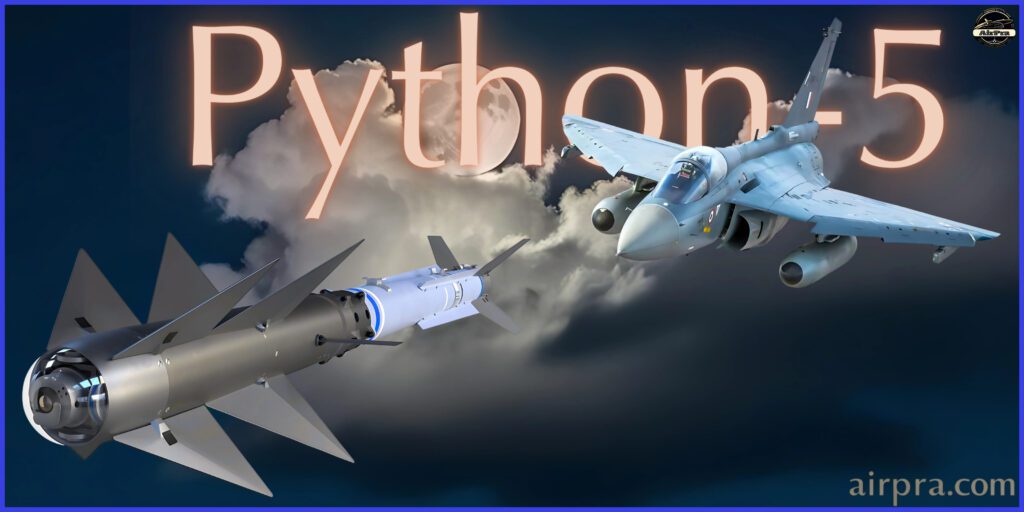
The Python-5 is Israel’s most advanced short-range air-to-air missile, capable of engaging targets in any direction, including the rear. It supports lock-on after launch (LOAL) and features an advanced seeker combining electro-optical and imaging infrared technologies to detect, track, and engage hostile aircraft. Its exceptional agility comes from 18 aerodynamic control surfaces.

The Python-5 may be compact, but it’s a powerhouse of precision and speed. Measuring 10 ft (120 in) in length with a span of just 25 in (64 cm), it’s engineered for agility in the most intense aerial dogfights. Weighing 105 kg (231 lb), the missile carries an 11 kg (24 lb) high-explosive warhead, optimised for lethal impact against enemy aircraft.

However, based on credible operational assumptions, analysts suggest the engagement may have involved either the Israeli-developed I‑Derby ER or the Python‑5. At the same time, it is important to note that the AIM‑120 AMRAAM remains a certified and standard air-to-air weapon integrated into the F-35’s core weapons system, making it another plausible candidate for the interception.
Its slim 6.3 in (16 cm) diameter allows for streamlined carriage on multiple fighter platforms. What truly sets it apart is its blistering top speed of Mach 4, enabling it to close the distance with lightning speed. With a range exceeding 20 km (12 mi), the Python-5 gives pilots a lethal edge in close combat, striking fast, hard, and from any direction.
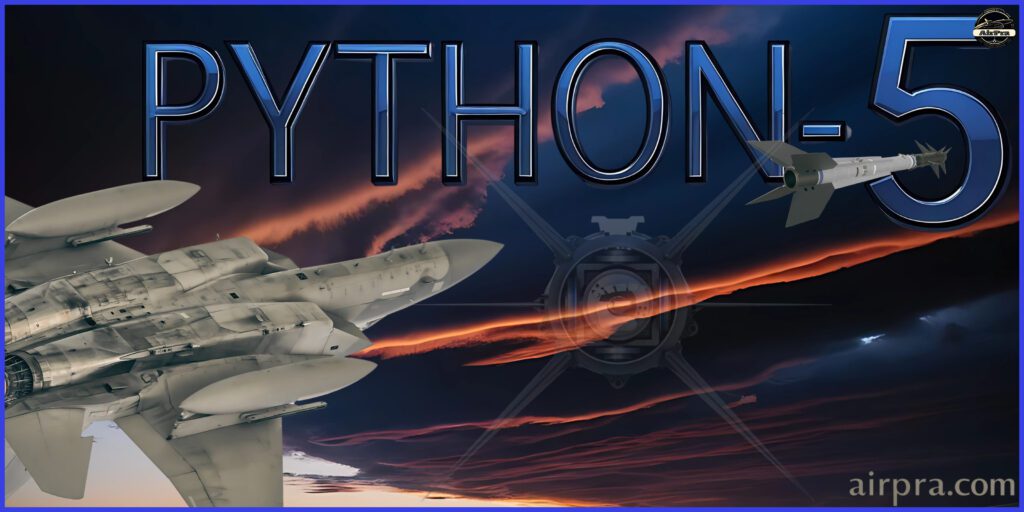
The Python-5 saw its first combat use in 2006, when Israeli F-16s downed two Hezbollah-operated Ababil drones. In May 2021, it was again used to intercept a Hamas-launched Shahed drone, confirming its effectiveness against UAV threats.

Derby / I-Derby ER
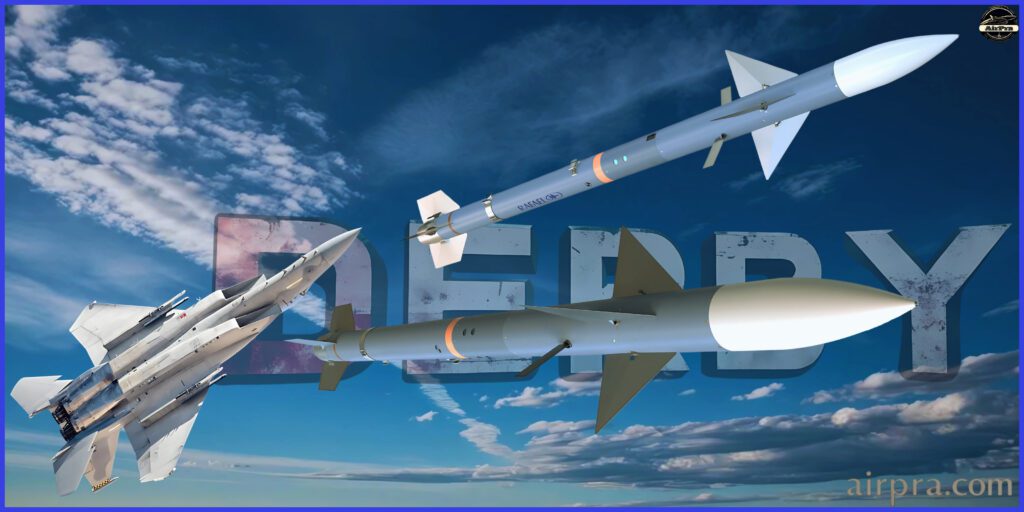
The Derby missile falls under the medium-range category of beyond-visual-range (BVR) air-to-air weapons and is equipped with active radar homing guidance. While it is not officially part of the Python series, its design is heavily based on Python-4, featuring a larger frame and a radar-based seeker for extended-range engagements.

The Derby is an advanced air-to-air missile designed to intercept distant aerial targets with speed and accuracy. With a length of about 143 in(12 ft), a wingspan of 64 cm(25 in), and a diameter of 16 cm(6.3 in), its compact form is tailored for minimal drag and maximum efficiency.
Weighing 118 kg(260 lb), it is armed with a 23-kg(51-lb) high-explosive fragmentation warhead, effective against a variety of airborne threats. Travelling at speeds close to Mach 4, the Derby can hit targets as far as 50 km(31 mi) away—giving pilots the ability to strike from a safe distance, long before the threat closes in.

Back in June 2015, Rafael introduced the I-Derby-ER—a smarter, longer-reaching version of its proven Derby missile. With a range stretching up to 100 km (62 mi), it’s powered by a dual-pulse rocket motor that kicks in during the final moments of flight, giving it that extra push when it matters most.
To make room for this advanced motor, Rafael cleverly merged the seeker and fuse into a compact, all-in-one sensor unit. Today, the Derby and its short-range partner, the Python, have been integrated into over 15 fighter aircraft worldwide, including India’s own HAL Tejas, reinforcing its growing reputation as a world-class combat jet.

A Quick Message to Our Readers
Some details in our articles may change over time. For the most accurate and up-to-date information, we recommend consulting additional sources as well.
We’re passionate about providing you with trusted insights into military systems and global developments. Your support helps us continue this work. When you purchase through our affiliate links, you’re helping us grow while receiving high-quality products in return.
Your thoughts matter to us. If there’s a topic or defence system you’d like to learn more about, let us know in the comments—we’ll do our best to cover it.
Thank you for being part of our journey. We appreciate your time and interest—happy reading!